
close
Choose Your Site
Global
Social Media

Nano Calcium Carbonate has become one of the most influential advanced fillers and functional additives in modern material engineering. Its rise is driven by its ability to upgrade product performance, enhance mechanical strength, reduce production costs, and enable new functionalities across plastics, coatings, rubber, adhesives, pharmaceuticals, food, and more. To understand what Nano Calcium Carbonate is, it is necessary to go beyond simple definitions and explore its structure, manufacturing pathways, performance characteristics, and practical value in industrial applications. This article delivers a complete and highly focused breakdown of Nano Calcium Carbonate: how it works, why it behaves differently from traditional calcium carbonate, and how manufacturers, engineers, and product developers can use it to unlock superior results.
Nano Calcium Carbonate (NCC) is an engineered ultrafine version of calcium carbonate with particle sizes typically ranging from 20 nm to 200 nm. Unlike conventional ground calcium carbonate, which has micrometer-scale particles, Nano Calcium Carbonate is synthesized through controlled precipitation processes that ensure uniform particle size, narrow distribution, and modified surface properties. These nanoscale attributes dramatically change how the material interacts with polymers, resins, and other matrices. Because the surface area increases exponentially at the nanoscale, NCC participates more actively in bonding, dispersion, and reinforcement. NCC is not merely a filler—its engineered structure enables it to act as a functional additive capable of improving toughness, opacity, rheology, gloss, and stability. Understanding what Nano Calcium Carbonate is requires recognizing it as both a structural and performance-enhancing component.
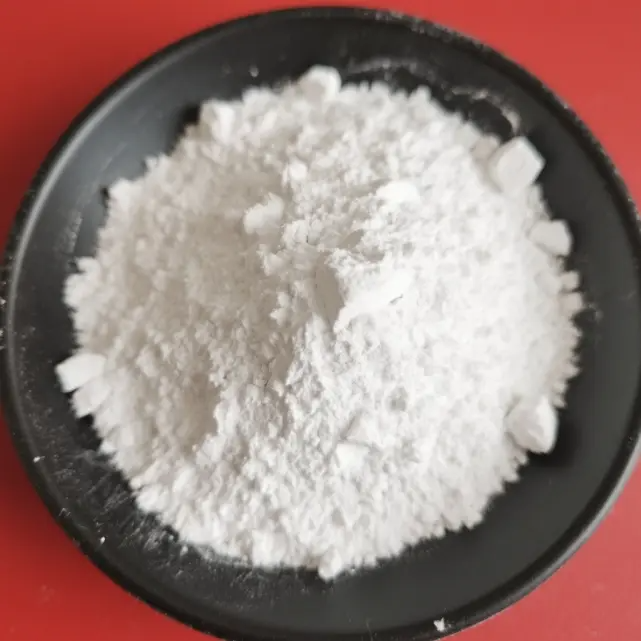
Nano Calcium Carbonate displays defining characteristics that set it apart from traditional calcium carbonate. The high surface-to-volume ratio increases interaction points within polymer chains, improving energy absorption and mechanical strength. The particle morphology—often spindle-shaped, cubic, spherical, or chain-structured—directly influences reinforcement behavior, viscosity modification, or optical performance. NCC typically possesses superb whiteness, low oil absorption, and high purity due to its controlled synthetic route. Surface modification is another key characteristic, where fatty acids, silanes, or titanates are coated on the particle surface to improve compatibility with hydrophobic materials. These attributes make NCC an adaptable additive for demanding applications requiring lightweight reinforcement, anti-settling behavior, and enhanced barrier properties. Every characteristic contributes to understanding what Nano Calcium Carbonate is: a customizable nano-engineered particle with performance-oriented functionalities.
Producing Nano Calcium Carbonate requires precise reaction control to achieve nanoscale uniformity. The most common method is the wet chemical precipitation process, where calcium ions react with carbonate ions under controlled temperature, pH, and mixing conditions. Advanced particle engineering techniques regulate nucleation, crystal growth, and agglomeration. As a result, manufacturers can design particle shapes targeted for specific uses, such as needle-like particles for reinforcing rubber or spherical particles for reducing viscosity in coatings. Surface modification often takes place during or after synthesis, with coupling agents chemically bonding to the nanoparticle surface to enhance dispersion. Additional technologies—CO₂ mineralization, high-gravity reactors, and microbubble dispersion—are now used to achieve lower energy consumption and more consistent nano-scale control. Understanding what Nano Calcium Carbonate is also means understanding the sophistication needed to produce it reliably and consistently.
| Method | Key Features | Industrial Advantages |
|---|---|---|
| Wet Chemical Precipitation | Controlled crystal growth; uniform particle size | Ideal for high-purity, high-whiteness grades |
| CO₂ Carbonization | Eco-friendly, reduced waste | Suitable for large-scale economical production |
| High-Gravity Reactor Processing | Fast reaction rates; narrow size distribution | Stable performance for high-end applications |
The main benefit of Nano Calcium Carbonate over traditional grades lies in its functional performance, not merely particle size reduction. The nanoscale dimensions make NCC highly reactive and capable of stronger integration with polymer chains. This leads to improved mechanical strength, reduced brittleness, and enhanced flexibility in plastics. In coatings, NCC improves leveling, increases opacity, and provides superior anti-settling behavior. Rubber compounds benefit from greater tear resistance and improved dynamic durability, allowing partial replacement of more expensive fillers while maintaining performance. Because Nano Calcium Carbonate possesses lower oil absorption than other fillers, it reduces viscosity in many formulations, enabling higher filler loading. Understanding what Nano Calcium Carbonate is means recognizing it as a performance-enhancing additive that often substitutes or complements titanium dioxide, talc, or silica, depending on the application.
| Property | Nano Calcium Carbonate | Conventional Calcium Carbonate |
|---|---|---|
| Particle Size | 20–200 nm | 1–10 µm |
| Surface Area | Very high | Moderate |
| Mechanical Reinforcement | Strong | Limited |
| Dispersibility | Excellent (especially modified grades) | Moderate |
| Optical Performance | High gloss and opacity | Lower gloss |
| Role in Formulations | Functional additive | Traditional filler |
Nano Calcium Carbonate has become a cross-industry essential due to its adaptability and multifunctional performance. In plastics, it is widely used in PVC profiles, pipes, PE films, and PP compounds to boost rigidity, dimensional stability, and stress-crack resistance. Coatings manufacturers rely on NCC for opacity control, rheology modification, matte/gloss balance, and anti-settling in water-based and solvent-based formulas. In rubber, NCC enhances reinforcement, reduces heat build-up, and improves elasticity, making it valuable in tires, hoses, and seals. Pharmaceutical and food industries use ultra-high-purity grades as calcium supplements due to their high bioavailability. Adhesives and sealants integrate NCC to improve consistency, reduce shrinkage, and increase bonding stability. Understanding what Nano Calcium Carbonate is involves recognizing its role as a key material across diverse manufacturing sectors.
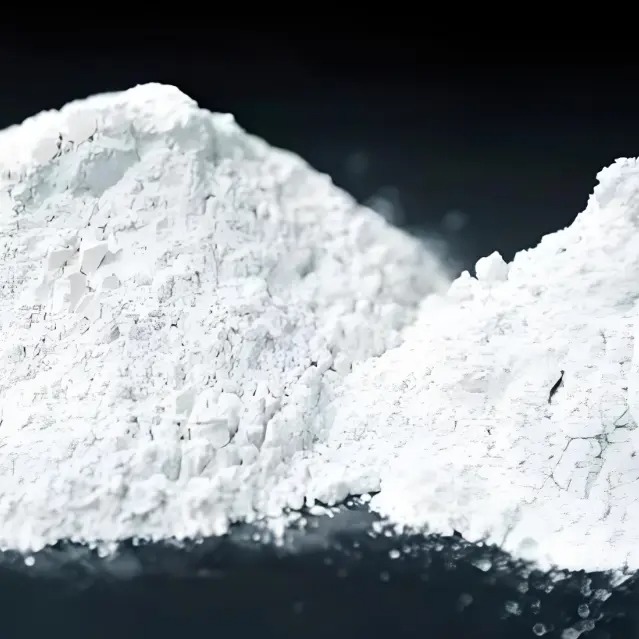
To fully unlock the benefits of Nano Calcium Carbonate, manufacturers must consider dispersion, resin compatibility, moisture sensitivity, and surface treatment. Proper dispersion is essential because nanoparticles tend to agglomerate; high-shear mixing, masterbatch dilution, or surface-modified grades help maintain separation. In polymer systems, choosing fatty-acid-coated or silane-coated NCC dramatically improves bonding strength and flow properties. The particle size distribution influences gloss, transparency, and mechanical reinforcement—narrower distributions produce more predictable performance. Moisture stability is important in hygroscopic environments, particularly in flexible PVC or moisture-cured adhesives. Optimizing load levels is equally critical; in plastics, 3–10% NCC may significantly enhance performance, while coatings may require between 1% and 20% depending on desired viscosity or gloss. Understanding what Nano Calcium Carbonate is means understanding how to integrate it properly into advanced formulations.
The global demand for Nano Calcium Carbonate continues to grow, driven by lightweight materials, sustainable manufacturing, and the need for cost-effective reinforcement additives. Manufacturers now offer multiple quality grades tailored for plastics, coatings, rubber, food, pharmaceuticals, and specialty formulations. When selecting Nano Calcium Carbonate, buyers should evaluate particle size, morphology, purity, surface modification, dispersibility, and application compatibility. High-whiteness grades are preferred in coatings and films, while needle-shaped varieties are optimal for elastic materials like rubber. Food and pharmaceutical applications require strict compliance with safety standards and heavy-metal limits. Trends also show increasing use of NCC to reduce titanium dioxide consumption due to cost pressure and regulatory changes. Understanding what Nano Calcium Carbonate is includes identifying the right grade that balances performance, cost, and regulatory compliance.
Nano Calcium Carbonate represents a significant evolution from conventional calcium carbonate, offering enhanced material performance, broader application potential, and greater versatility in modern industrial formulations. Its nanoscale structure, engineered morphology, and customizable surface chemistry allow it to act not only as a filler but also as a functional performance additive. Whether used to reinforce plastics, stabilize coatings, strengthen rubber products, or enhance pharmaceutical bioavailability, Nano Calcium Carbonate delivers measurable value. Understanding what Nano Calcium Carbonate is equips manufacturers, formulators, and engineers to utilize it strategically, optimize product performance, and support innovation across multiple industries.
1. What is Nano Calcium Carbonate?
Nano Calcium Carbonate is an ultrafine particle form of calcium carbonate with engineered nanoscale dimensions, typically 20–200 nm, offering enhanced performance in industrial and consumer applications.
2. How is Nano Calcium Carbonate different from regular calcium carbonate?
It has smaller particle size, larger surface area, better dispersibility, and significantly higher reinforcement capabilities, making it a functional additive rather than just a filler.
3. What industries use Nano Calcium Carbonate the most?
Plastics, coatings, adhesives, rubber, pharmaceuticals, and food industries all use specialized grades of Nano Calcium Carbonate.
4. Does Nano Calcium Carbonate replace titanium dioxide?
In some applications, yes. NCC can partially replace TiO₂ by improving opacity and scattering, reducing cost without compromising quality.
5. Is Nano Calcium Carbonate safe?
High-purity, food-grade and pharma-grade Nano Calcium Carbonate is considered safe when manufactured under strict quality standards and used within regulatory guidelines.


