close
Choose Your Site
Global
Social Media

Key Properties of Nano Calcium Carbonate Relevant to Water-Based Coatings
Benefits of Using Nano Calcium Carbonate in Water-Based Coatings
Nano Calcium Carbonate (NCC) has emerged as a highly functional filler in the coatings industry, particularly due to its nanoscale particle size and high surface area. Its integration into water-based coatings offers potential improvements in mechanical strength, opacity, and rheology. However, the question of compatibility remains a critical consideration for formulators. Water-based systems have unique stability and dispersion challenges, making the successful incorporation of NCC dependent on understanding its physical and chemical interactions within aqueous environments. This article provides an in-depth exploration of the compatibility of Nano Calcium Carbonate with water-based coatings, highlighting mechanisms, benefits, challenges, and formulation strategies.
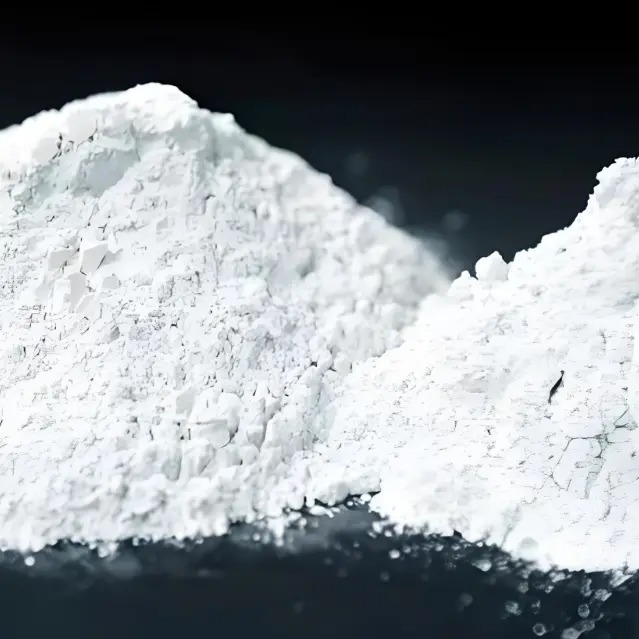
Nano Calcium Carbonate is a nanoscale inorganic filler derived from natural or synthetic calcium carbonate. The particle sizes typically range from 20 nm to 100 nm, which significantly influences surface activity and dispersion behavior. Unlike conventional micron-sized calcium carbonate, NCC exhibits:
High surface energy, which increases interactions with polymeric matrices.
Uniform particle distribution, improving coating smoothness and optical properties.
Potential for surface modification, enhancing compatibility with hydrophilic or hydrophobic systems.
Its nanoscale properties make NCC particularly attractive for water-based coatings, but the high surface energy also introduces risks of agglomeration and stability issues.
Table 1: Comparison of NCC and Conventional Calcium Carbonate
| Property | Nano Calcium Carbonate | Conventional Calcium Carbonate |
|---|---|---|
| Particle Size | 20–100 nm | 1–5 μm |
| Surface Area | 50–100 m²/g | 1–10 m²/g |
| Dispersion | Requires stabilizers/surface treatment | Relatively easy |
| Optical Impact | High whiteness and opacity | Moderate |
| Rheological Influence | Strong thickening effect | Moderate |
When evaluating compatibility, several intrinsic properties of NCC determine its performance:
Hydrophilicity/Hydrophobicity – Pristine NCC tends to be hydrophilic, facilitating dispersion in aqueous media. Surface-modified NCC can be tuned to interact with specific polymer chemistries.
Particle Morphology – Spherical or rhombohedral particles disperse more evenly, reducing sedimentation and viscosity fluctuations.
Surface Charge (Zeta Potential) – High zeta potential prevents aggregation, ensuring a stable dispersion in water-based systems.
Interaction with Polymers – NCC can form hydrogen bonds with acrylics, polyurethanes, and other water-dispersible polymers, which stabilizes the coating and improves mechanical performance.
The interplay between these properties defines whether NCC will remain stable, avoid flocculation, and deliver the desired performance in a water-based formulation.
Nano Calcium Carbonate’s compatibility with water-based coatings is primarily driven by dispersion stability and chemical interaction:
Steric Stabilization – Surface-modified NCC is coated with polymers or surfactants that prevent particle aggregation, enhancing homogeneity.
Electrostatic Repulsion – Charged particles repel each other, reducing sedimentation over time.
Polymer-NCC Interactions – Hydrogen bonding or Van der Waals forces between NCC surfaces and water-dispersed polymers enhance adhesion, improving film integrity.
Rheology Control – NCC influences the flow and leveling properties of coatings, enabling uniform application and controlled drying.
Proper control over these mechanisms ensures that NCC can be seamlessly integrated without destabilizing the coating system.
Incorporating NCC into water-based coatings can provide multiple performance enhancements:
Enhanced Mechanical Strength – NCC reinforces the polymer matrix, improving scratch and abrasion resistance.
Improved Opacity and Whiteness – Nanoscale particles scatter light efficiently, reducing the amount of pigment needed.
Rheological Optimization – NCC can act as a rheology modifier, maintaining viscosity while improving application properties.
Reduced VOCs – By functioning as a high-efficiency filler, NCC allows for reduced solvent content while maintaining coating quality.
Table 2: Performance Benefits of NCC in Water-Based Coatings
| Benefit | Mechanism | Practical Impact |
|---|---|---|
| Mechanical reinforcement | Filler-polymer interaction | Higher scratch and wear resistance |
| Optical enhancement | Light scattering by nanoparticles | Brighter, whiter coatings with fewer pigments |
| Rheology improvement | Network formation in dispersion | Better leveling, reduced sagging |
| Environmental | Reduced pigment/solvent load | Lower VOC emissions |
Despite the benefits, there are formulation challenges:
Agglomeration Risk – NCC’s high surface energy can lead to particle clumping if not properly stabilized.
pH Sensitivity – NCC dispersion can be unstable in extreme acidic or basic conditions.
Impact on Drying – High NCC loading may affect water evaporation rates, potentially altering film formation.
Cost Considerations – Surface-modified NCC is more expensive than conventional fillers, affecting overall production economics.
Understanding and mitigating these challenges is critical for formulators aiming to achieve long-term stability and performance.
Formulators can improve NCC integration using several strategies:
Surface Treatment – Coating NCC with silanes, polymers, or surfactants improves dispersion and prevents agglomeration.
Controlled Particle Loading – Excessive NCC can increase viscosity; optimal concentrations balance performance with workability.
pH and Ionic Control – Maintaining a slightly alkaline environment enhances particle stability.
High-Shear Dispersion Techniques – Ultrasonic or high-speed mixing ensures uniform particle distribution.
Synergistic Additives – Combining NCC with dispersants or co-fillers can enhance stability and mechanical properties.
These strategies collectively ensure that NCC can deliver consistent performance in water-based coatings without destabilizing the system.
Several industries have successfully integrated NCC into water-based coatings:
Architectural Coatings – NCC improves whiteness and film smoothness, reducing the need for titanium dioxide.
Wood Coatings – Enhanced scratch resistance and better leveling are achieved with optimized NCC formulations.
Automotive Water-Based Paints – Nano fillers improve mechanical durability while maintaining environmental compliance.
These examples demonstrate practical solutions and validate NCC’s compatibility when properly formulated.
Nano Calcium Carbonate offers significant advantages for water-based coatings, including improved mechanical strength, opacity, and rheology. Compatibility is primarily determined by particle size, surface properties, and dispersion stability. While challenges such as agglomeration and pH sensitivity exist, careful formulation strategies—like surface treatment, optimized loading, and dispersant selection—enable successful integration. NCC, when applied correctly, not only enhances coating performance but also supports environmentally friendly, low-VOC solutions.
Q1: Can NCC be used in all types of water-based coatings?
A1: NCC is compatible with acrylic, polyurethane, and epoxy-based waterborne coatings, but formulation adjustments may be necessary to ensure stability.
Q2: What particle size of NCC is ideal for water-based coatings?
A2: Typically, 20–100 nm provides the best balance between dispersion, opacity, and rheological control.
Q3: How can I prevent NCC from agglomerating in water-based systems?
A3: Use surface-modified NCC, maintain proper pH, and employ high-shear dispersion techniques.
Q4: Does NCC affect drying time of water-based coatings?
A4: High NCC loadings can slightly alter drying rates, so optimal concentrations and formulation adjustments are recommended.
Q5: Are there environmental benefits to using NCC?
A5: Yes, NCC can reduce the need for pigments and solvents, supporting low-VOC and environmentally friendly coatings.