close
Choose Your Site
Global
Social Media

Views: 0 Author: Site Editor Publish Time: 2026-09-15 Origin: Site
Modern polymer formulations demand precise chemical stabilization. Acid-scavenging capabilities remain non-negotiable to maintain structural integrity. These features protect materials during intense thermal processing and long-term end-use applications. Today, formulators constantly balance additive budgets against strict quality standards. High-grade plastics require flawless purity, excellent dispersion, and strict optical clarity. Compromising on these chemical neutralizers can ruin entire production batches through rapid degradation and equipment damage. In this guide, we will define the exact functional roles of calcium hydroxide for plastics. You will discover clear evaluation criteria for accurate procurement. Furthermore, we will outline the real-world implementation steps required to integrate this vital chemical seamlessly into your existing production lines.
Primary Function: Acts as a highly effective acid scavenger and thermal stabilizer, particularly critical in PVC and halogenated polymer production.
Evaluation Focus: Successful integration depends on precise particle size distribution and high purity to prevent agglomeration and visual defects.
Procurement Standard: Formulators must prioritize "high whiteness hydrated lime" to avoid tinting issues in color-sensitive plastic profiles.
Implementation Risk: Requires strict moisture and atmospheric control during storage to prevent conversion back to calcium carbonate prior to compounding.
Processing halogenated polymers generates intense heat. This thermal stress breaks molecular bonds. It eventually releases hydrochloric acid (HCl) into the polymer matrix. Unchecked HCl creates a destructive cycle. It corrodes expensive extrusion equipment rapidly. It also discolors the polymer and destroys its mechanical strength. You must stop this chemical reaction early in the compounding phase.
Formulators need additives to act fast. An effective additive neutralizes acid rapidly. It blends seamlessly into the polymer matrix. It must preserve tensile strength. Crucially, it must keep the unit cost low. Many traditional fillers fail these rigorous benchmarks. They either slow down the production line or compromise the final product appearance. You need a proactive chemical solution to prevent these failures.
This is where active chemical neutralizers prove their value. They do not just occupy space like passive volume fillers. Using industrial calcium hydroxide stops the degradation loop entirely. It chemically binds to the liberated acids. This reaction extends the lifecycle of manufacturing equipment. It protects costly extruder screws and dies from pitting. Ultimately, it ensures the final plastic product remains durable, flexible, and visually appealing.
Relying solely on primary heat stabilizers without an acid-scavenging synergist.
Ignoring early warning signs like slight yellowing during initial extrusion runs.
Using coarse fillers that create friction and actually increase internal heat generation.
Understanding the exact chemical mechanisms helps formulators optimize their recipes. This chemical acts differently depending on the host polymer. We see its greatest benefits across three distinct manufacturing applications.
First, it functions as a powerful co-stabilizer in PVC manufacturing. When PVC degrades, it releases acidic byproducts. The hydroxide reacts immediately with these acids. It forms stable calcium chloride and water. This simple chemical reaction permanently halts the catalytic degradation loop. It prevents the dreaded "zipper degradation" effect in rigid PVC pipes and profiles.
Second, specialty rubbers require precise curing agents. Manufacturers rely on it heavily in fluoroelastomers, like FKM. Here, it acts as a cross-linking activator. It also serves as a vital acid acceptor during the intense vulcanization process. Without it, the rubber compounds would fail to cure properly. They would lose their heat and fluid resistance.
Third, compounding environments often trap trace moisture. As a versatile plastic additive powder, it behaves as an in-process desiccant. It absorbs residual moisture safely during high-temperature blending. This prevents porosity in the final melt. It stops "blowholes" from forming in extruded profiles, ensuring a smooth surface finish.
Scavenging hydrochloric acid in rigid PVC pipe extrusion.
Activating cross-links in high-performance automotive rubber seals.
Scavenging moisture during the compounding of recycled polymer streams.
Preventing equipment corrosion in wire and cable jacketing lines.
Procuring raw materials requires strict attention to specification sheets. Not all grades perform equally in polymer environments. You must evaluate several key physical and chemical properties.
You must verify chemical purity first. High-grade variants maintain a Ca(OH)2 percentage well above 95%. Strict limits on heavy metals are non-negotiable. Excess lead or cadmium will violate safety regulations. You must ensure full compliance under global directives like REACH and RoHS. A reliable Certificate of Analysis (CoA) will confirm these purity levels.
Visual quality matters immensely for consumer goods. You must specify high whiteness hydrated lime for sensitive applications. Impurities like iron oxide or manganese cause severe yellowing. They turn translucent plastic goods a dull gray. Such defects lead to immediate batch rejections. Formulators use colorimetry (L*a*b* values) to guarantee consistent brightness.
Micro-fine sizing is mandatory for structural integrity. We look for a median particle size (D50) under a few microns. Coarse particles create severe stress concentrations in the plastic matrix. They form localized weak points. This drastically reduces the impact resistance and tensile strength of molded products.
Finally, some matrices require enhanced compatibility. You must evaluate surface treatments. Hydrophobic coatings, like stearic acid treatment, help significantly. They reduce the surface energy of the powder. This allows the inorganic particles to blend flawlessly into organic polymer chains without clumping.
Formulators often confuse similar calcium-based additives. Distinguishing their chemical roles prevents costly formulation errors. Misapplying these powders leads to processing failures.
Carbonate acts as a passive volume-filling agent. It increases stiffness and reduces overall resin costs. Conversely, hydroxide provides active chemical stabilization. You add carbonate for physical bulk. You add hydroxide to prevent chemical degradation. Replacing one with the other destroys the acid-scavenging balance.
These chemicals also differ from stearates. They serve overlapping but distinct roles. Calcium stearate acts primarily as a lubricant. It works internally and externally to aid mold release. It reduces friction against extruder walls. Hydroxide remains your primary chemical neutralizer. You often use them together for synergistic processing benefits.
Additive Type | Primary Function | Chemical Activity | Impact on Polymer Matrix |
|---|---|---|---|
Calcium Hydroxide | Acid Scavenger / Co-stabilizer | Highly Active (Neutralizes HCl) | Prevents degradation and maintains color stability. |
Calcium Carbonate | Volume Filler / Extender | Passive (Inert Filler) | Increases rigidity and lowers unit resin volume. |
Calcium Stearate | Internal/External Lubricant | Mildly Active (Reduces Friction) | Improves melt flow and assists in mold release. |
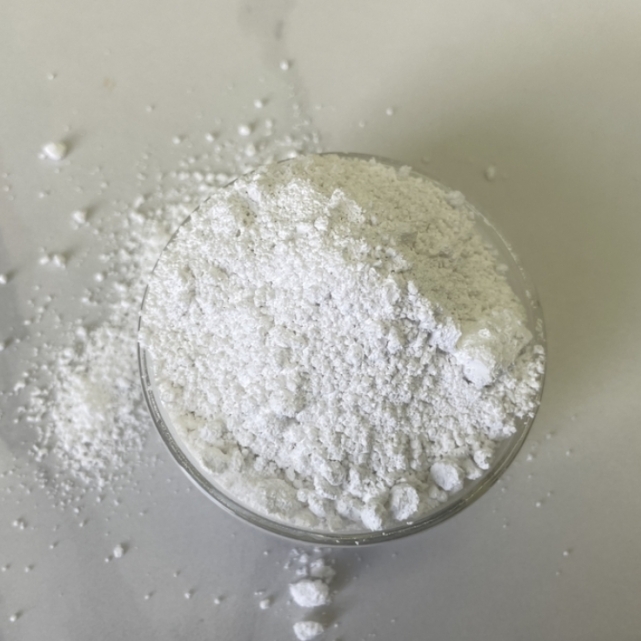
Integrating new powders into your compounding line requires careful planning. Untreated slaked lime powder presents processing hurdles. It naturally agglomerates in storage. Strong inter-particle forces pull the fine powder together. Formulators must evaluate high-shear mixing setups. Twin-screw extruders usually provide enough shear force. Alternatively, formulators can purchase pre-dispersed masterbatches to guarantee uniform dispersion.
This chemical is highly reactive to the environment. Atmospheric carbon dioxide triggers rapid carbonation. Ambient moisture degrades it quickly. This reaction turns the active hydroxide back into passive carbonate. You must protect silos and packaging heavily. Proper sealing preserves its chemical efficacy before it enters the compounding extruder.
Keep bags sealed until the exact moment of compounding.
Store pallets in climate-controlled, low-humidity environments.
Implement a strict First-In-First-Out (FIFO) inventory system.
You are handling an alkaline material. Worker safety remains a top priority. Dust extraction systems must operate efficiently over all mixing hoppers. Workers must wear proper personal protective equipment (PPE), including tight-fitting respirators and safety goggles. You need to integrate these protocols into your daily safety management systems to prevent skin and respiratory irritation.
Transitioning from theory to production requires a methodical approach. Never skip the pilot phase. Request material samples first. Run rheological testing to check flow behaviors inside the extruder. Conduct accelerated weathering tests on the final molded parts. These tests verify long-term thermal stability without unwanted discoloration.
Assess your supplier carefully during vendor auditing. They must deliver consistent particle size across multiple shipments. Whiteness must remain identical batch-over-batch. Ask for statistical process control data to prove their reliability. A credible supplier welcomes these technical audits.
Move from technical specifications to active procurement. Secure a localized supply chain to minimize transit times and moisture exposure. Ensure all compliance documents are ready for your quality control team. Then, initiate your pilot-scale extrusion runs to validate the formula before committing to full-scale commercial production.
Audit your current thermal stabilization processes to identify areas for acid-scavenging improvements.
Request high-purity samples to test neutralization efficacy in your specific polymer matrix.
Upgrade your storage facility seals to prevent moisture ingress and premature carbonation.
Review your mixing equipment capabilities to ensure high-shear dispersion of ultra-fine powders.
A: No. It acts as a synergistic co-stabilizer. Formulators use it alongside zinc or other metallic stabilizers. It does not act as a complete replacement. It specifically targets acid scavenging to boost the primary stabilizer's overall performance.
A: When properly dispersed, it does not prevent mechanical recycling. However, its neutralizing reactions deplete its stabilizing efficacy during the initial lifecycle. Subsequent heat cycles will require fresh additive top-ups during regrind processing.
A: Dosage varies heavily by polymer type and end application. It typically ranges from 1 to 5 phr (parts per hundred resin) for stabilization purposes. Formulators must empirically test this dosage for each specific formulation to find the optimal balance.