
close
Choose Your Site
Global
Social Media

Views: 0 Author: Site Editor Publish Time: 2025-06-03 Origin: Site
Calcium oxide, widely known as quicklime, is a critical industrial material used in applications ranging from construction and metallurgy to water treatment and chemical manufacturing. One of the most common and important questions surrounding this compound is: does calcium oxide completely dissolve in water?
At first glance, it might seem like a basic chemistry question. But in reality, the interaction between calcium oxide and water involves a fascinating chemical transformation that has real implications for industrial processes, product selection, and safety management. In this in-depth guide, we’ll break down what happens when calcium oxide is introduced to water, explore whether it truly dissolves, and identify the best product types for specific applications.
We'll also compare various commercial calcium oxide products—including premium and fluxing-grade types—based on their purity, reactivity, and practical performance in water-based systems.
Before answering whether calcium oxide dissolves in water, it's important to understand what happens when the two substances interact.
When you pour water on calcium oxide, a vigorous chemical reaction takes place:
CaO (s) + H₂O (l) → Ca(OH)₂ (aq) + Heat
This reaction is:
Exothermic (releases heat)
Rapid and sometimes violent
Irreversible under standard conditions
Rather than dissolving in the traditional sense, calcium oxide reacts chemically with water to form calcium hydroxide—a compound with different solubility properties.
This distinction is essential. Calcium oxide does not simply dissolve; it transforms.
Produces calcium hydroxide (Ca(OH)₂), also known as slaked lime
Releases enough energy to boil or vaporize water on contact
Changes the chemical identity of the original substance
If you’re thinking about using calcium oxide in any process where water is involved, understanding this reaction is crucial for both safety and performance.
Let’s address the central question: Is calcium oxide soluble in water?
The answer is no—calcium oxide does not dissolve in water like sugar or table salt. Instead, it undergoes a chemical reaction, forming calcium hydroxide. That new compound, calcium hydroxide (Ca(OH)₂), is only slightly soluble in water.
| Property | Value |
|---|---|
| Solubility of CaO in water | Reacts, doesn't dissolve |
| Product of reaction | Calcium hydroxide (Ca(OH)₂) |
| Solubility of Ca(OH)₂ | ~1.73 g/L at 20°C |
| pH of resulting solution | ~12.4 |
| Temperature effect | Slightly increases solubility |
So, while calcium oxide appears to “disappear” in water, what’s actually happening is a chemical reaction that forms a sparingly soluble compound. This reaction is what makes calcium oxide so useful in many industrial and environmental applications.
In chemistry, dissolving and reacting are two different processes:
Dissolution involves a substance dispersing uniformly in a solvent without changing its chemical identity (e.g., salt in water).
Reaction involves a chemical transformation, where the original compound becomes something new (e.g., calcium oxide into calcium hydroxide).
Calcium oxide falls firmly into the second category. It reacts with water rather than dissolving in it.
Understanding this distinction helps prevent mistakes in processes like mixing, dosing, and storage—especially in industrial contexts where precision matters.
The reaction between calcium oxide and water isn’t just a laboratory curiosity. It forms the basis of numerous industrial processes. Let’s explore some of the most important applications.
Quick lime (calcium oxide) plays a vital role in the building industry. When mixed with water and sand, it forms calcium hydroxide, which gradually absorbs carbon dioxide from the air to harden into calcium carbonate (CaCO₃)—a key component of mortar and plaster.
Benefits in construction:
Quick setting
High bonding strength
Moisture resistance
Enhances concrete durability
One of the top uses of calcium oxide is in treating potable water and industrial wastewater. The CaO reacts with water to form a high-pH solution that:
Precipitates heavy metals
Neutralizes acidic contaminants
Controls microbial growth
High Purity Quick Lime
Premium Quicklime Powder for Industrial Water Treatment
In the steel and non-ferrous metal industries, calcium oxide is used as a fluxing agent. It helps remove impurities from metal ores during smelting by forming slag.
Key functions:
Reduces melting point
Removes silica, phosphorus, and sulfur
Improves metal strength
Recommended product: Fluxing Grade Calcium Oxide
The strong alkalinity of calcium hydroxide (from calcium oxide and water reaction) makes it effective in:
Treating acidic soils
Stabilizing hazardous waste
Neutralizing industrial emissions
In these industries, calcium hydroxide produced from calcium oxide is used for:
pH control
Filler material
Pigment formation
Choosing the appropriate calcium oxide product depends on your application. Here's a comparison of key product types:
| Product Type | Purity (%) | Best Use Case | Reactivity | Source |
|---|---|---|---|---|
| Premium Calcium Oxide | ≥98% | Water treatment, papermaking | High | cncalcium.com |
| Fluxing Grade Calcium Oxide | 90–99% | Metallurgy, steel manufacturing | Very High | cncalcium.com |
| Cosmetic Grade Calcium Oxide | ≥95% | Skincare, medical formulations | Moderate | cncalcium.com |
| Construction Grade Quicklime | 90–95% | Cement, plaster, bricks | Moderate | cncalcium.com |
| Industrial Grade Quicklime Powder | ≥96% | Environmental, chemical industry | High | cncalcium.com |
When selecting calcium oxide, consider:
Purity: High purity (≥98%) for water treatment and sensitive chemical processes.
Reactivity: Faster reactions for pH adjustment or slag formation.
Form: Lumps for high-heat environments, powder for dispersion in water.
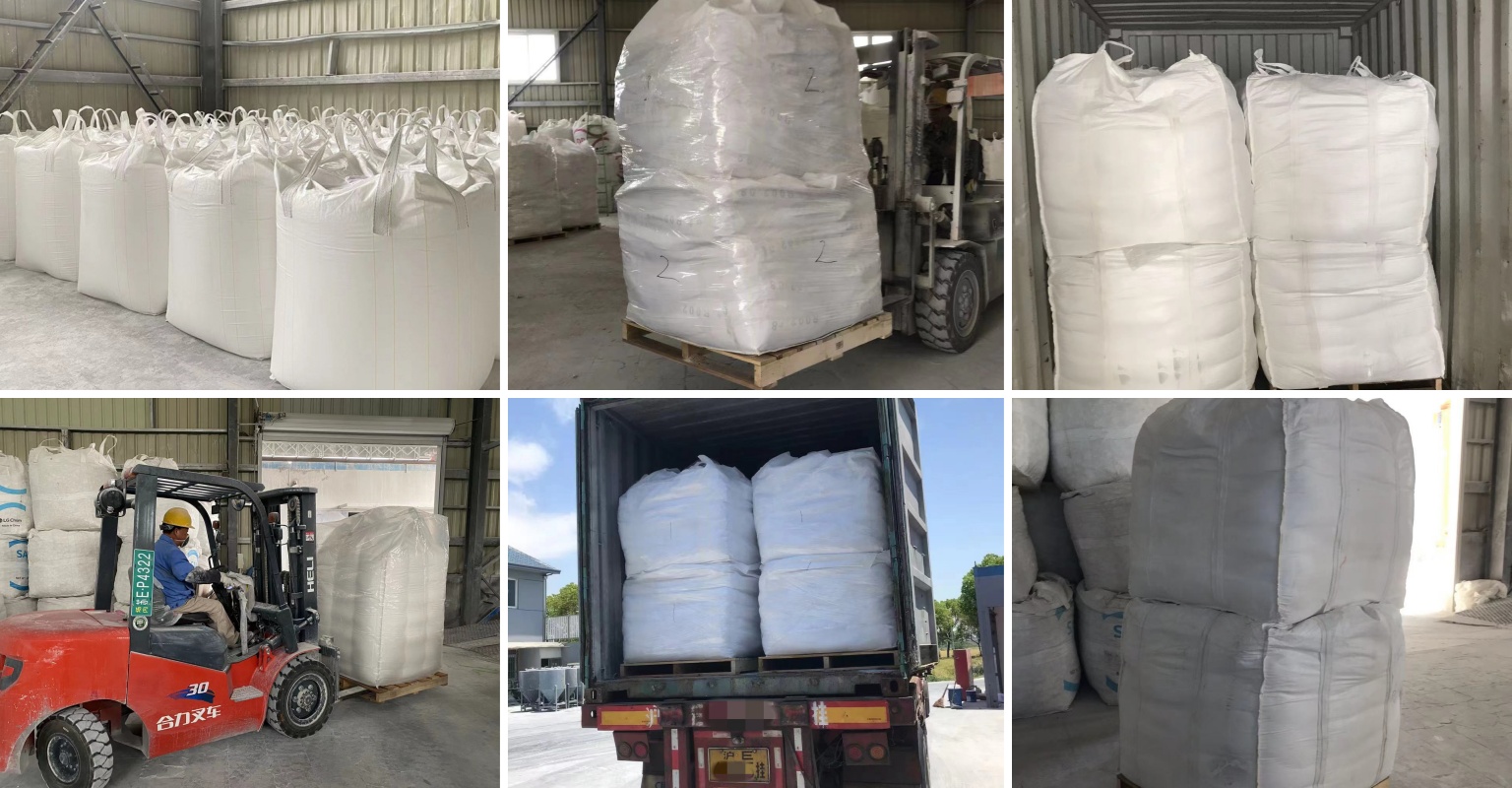
Packaging: Choose 25kg bags or jumbo bags based on usage scale.
Safety Requirements: Ensure proper moisture control and labeling.
Changshu Hongyu Calcium offers customizable options across all these parameters.
Because of its strong exothermic reaction with water, calcium oxide must be handled with care.
Safety Tips:
Always add calcium oxide to water, not the reverse.
Use gloves, goggles, and masks.
Ensure proper ventilation.
Store in moisture-free environments.
Have emergency protocols in place.
Many people confuse the reactivity of calcium oxide with solubility. Here's why that's problematic:
“Calcium oxide dissolves in water” → ❌ False. It reacts.
“It's safe to mix water and calcium oxide casually” → ❌ False. Reaction is violent.
“Calcium oxide is the same as calcium hydroxide” → ❌ False. They are chemically distinct.
A1: Calcium oxide (CaO), or quicklime, is a white, alkaline compound used in construction, metallurgy, and water treatment. It is made by heating calcium carbonate (limestone) above 900°C.
A2: No, it is not soluble in the traditional sense. It reacts with water to form calcium hydroxide, which has limited solubility (~1.73 g/L at 20°C).
A3: The reaction is exothermic, producing calcium hydroxide and releasing heat. It can cause water to boil or splatter, requiring strict safety precautions.
A4: The molar mass of calcium oxide is 56.08 g/mol, based on calcium (40.08 g/mol) and oxygen (16.00 g/mol).
A5: It's primarily used in metallurgy to remove impurities during smelting. It reacts with silica and other compounds to form slag.
A6: Calcium oxide is produced by calcining calcium carbonate (limestone) at high temperatures. This removes CO₂ and leaves behind CaO.
Although calcium oxide does not dissolve in water in the traditional sense, its reaction with water is one of the most important industrial chemical processes. The transformation into calcium hydroxide powers applications in construction, water treatment, metallurgy, and more.
By understanding the difference between solubility and reactivity, and by choosing the correct calcium oxide product—whether it's premium quicklime or fluxing-grade CaO—you can ensure safety, efficiency, and optimal outcomes in your application.
For reliable, high-purity calcium oxide solutions, explore the product catalog at Changshu Hongyu Calcium Co., Ltd.. Their wide range of industrial-grade quicklime offerings supports everything from environmental protection to advanced manufacturing.


