close
Choose Your Site
Global
Social Media

Views: 0 Author: Site Editor Publish Time: 2026-05-18 Origin: Site
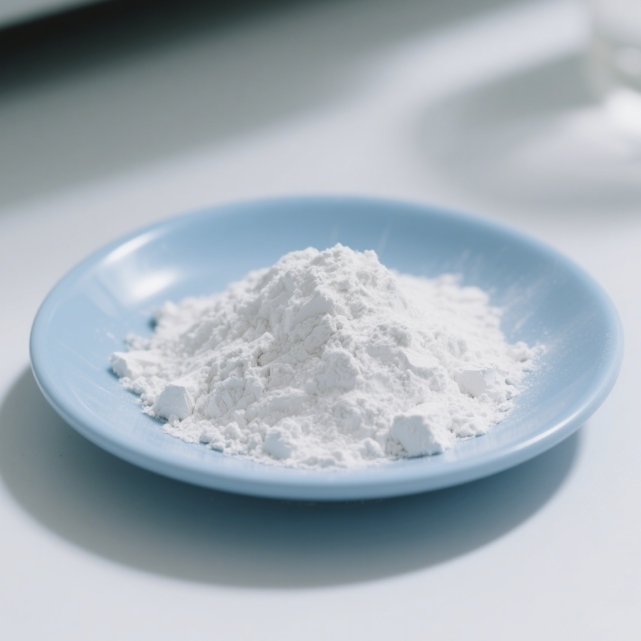
Standard mineral fillers lower your baseline formulation costs. Unfortunately, they often compromise the mechanical integrity, flexibility, or surface finish of your final product. You are forced to choose between strict budget constraints and premium physical performance. Enter nano calcium carbonate. These specialized particles measure well under 100 nanometers in diameter. They serve as much more than a simple volume-occupying additive. They act as a highly functional reinforcement material.
By integrating these nanoscale minerals, manufacturers transform standard polymers into resilient composites. Our primary purpose is to provide formulation engineers and procurement leaders with an objective evaluation. We will analyze how this advanced material performs across the plastics, rubber, and coatings industries. You will discover practical implementation strategies to avoid common processing failures. We also outline strict shortlisting criteria to help you secure the most reliable supply chains. This ensures you maximize structural gains while optimizing your manufacturing efficiency.
Formulation Efficiency: Nano calcium carbonate can replace up to 20% of expensive impact modifiers (like CPE, MBS) in plastics while maintaining structural integrity.
Mechanical Superiority: In rubber matrices, it creates stronger filler-filler networks (the Payne effect), vastly improving tear and abrasion resistance over standard microcalcium.
Implementation Risk: Untreated nano-particles are prone to agglomeration; successful adoption requires specifying surface-treated (e.g., stearic acid-coated) grades for non-polar matrices.
ESG & Cost Balance: Acts as a lower-carbon alternative to synthetic polymers while optimizing cycle times and energy consumption during compounding.
Standard Ground Calcium Carbonate (GCC) and microcalcium serve a straightforward business purpose. They excel at bulk cost-cutting. However, they consistently fail in high-stress, precision, or high-gloss applications. Large particles create weak points within a polymer matrix. When you subject the product to heavy loads, it fractures. Alternative reinforcements like glass fiber boost tensile strength significantly. Unfortunately, they often induce severe product brittleness and accelerate machinery wear.
The massive surface area-to-volume ratio of nanoscale particles fundamentally changes polymer interaction. They disperse deeply between polymer chains. This immense contact area absorbs and dissipates mechanical stress efficiently. It stops microscopic cracks from expanding under pressure. You gain incredible strength without adding excessive weight or rigidity.
We must view this through a comparative lens connecting features to outcomes. Conventional fillers degrade flexibility. Adding bulk makes the plastic rigid and prone to shattering. Nano variants provide a rare balance. They increase stiffness while protecting structural elongation. They allow materials to stretch under heavy impact rather than snapping. We strongly advise buyers to deploy strategic placement. You should reserve ultrafine calcium carbonate for premium, high-durability product lines. In these specific applications, long-term performance heavily outweighs raw bulk material costs.
Filler Type | Primary Benefit | Major Drawback | Flexibility Impact | Ideal Application |
|---|---|---|---|---|
Ground Calcium Carbonate (GCC) | Lowest raw material cost | Poor dispersion; causes fractures | Significantly degrades elongation | Low-end bulk plastics, disposable items |
Glass Fiber | Extreme tensile strength | Induces severe brittleness | Destroys flexibility entirely | Rigid structural components |
Nano Calcium Carbonate | High strength & toughness balance | Requires surface treatment to prevent clumping | Maintains or improves elongation | Premium automotive parts, durable films |
Synthetic toughening agents drain your procurement budgets rapidly. Chlorinated Polyethylene (CPE) and Methacrylate-Butadiene-Styrene (MBS) cost significantly more than mineral additives. Formulators deploy them to prevent rigid plastics from shattering. You can implement a much smarter substitution strategy today. You can safely replace up to 20% of these costly modifiers. A high-quality plastic reinforcement filler achieves this cost reduction without sacrificing impact strength. The polymer matrix remains incredibly tough and durable.
Different manufacturing processes yield specific, measurable outcomes when incorporating these nanoscale particles:
Blown Films & Bags: Polyethylene (PE) resins benefit immediately. The nanoparticles enhance tear resistance across the entire film web. They also boost surface gloss dramatically. Unlike standard minerals, they do not cause unwanted opacity. Your retail packaging remains visually striking and clear.
Injection Molding: Polypropylene (PP) components face extreme temperature variations. Automotive dashboards and appliance housings tend to warp over time. Nano additives improve dimensional stability permanently. They lock the polymer chains in place. You will notice significantly reduced heat shrinkage during rapid cooling phases.
Drawing and Woven Sacks: Heavy-duty agricultural films require immense tensile strength. Woven polypropylene threads must endure severe mechanical tension. Nanoparticles reinforce the internal thread structure. They prevent snapping and fraying during high-speed drawing processes.
This approach delivers a direct cost-benefit output. Formulators rely heavily on titanium dioxide to achieve brilliant whites. It remains a notoriously expensive pigment. Nanoscale minerals act as an exceptional high-whiteness extender. They reduce your reliance on premium white pigments. Simultaneously, they improve the mechanical density of the final plastic product.
Uncrosslinked natural rubber composites demand robust internal structural support. Scientific research highlights a distinct reinforcement mechanism for nanoscale materials. They interact aggressively with rubber molecules. Standard micro-fillers sit passively inside the mixture. Nanoparticles bond tightly to the surrounding matrix. Laboratory tests confirm a significantly higher "bound rubber" content compared to conventional additives.
This bonding triggers important rheological phenomena. The Payne effect describes how filler networks break down and reform under dynamic strain. The Mullins effect maps stress-induced softening. Nanoscale particles amplify both effects positively. They restrict molecular chain mobility effectively. They absorb and distribute severe mechanical shocks. This creates highly resilient filler-filler networks inside the rubber.
These dynamic networks deliver serious performance upgrades. Tensile strength increases sharply across the board. Rubber parts resist tearing under extreme tension. Chemical durability improves just as effectively. The material provides excellent acid and alkali resistance. Furthermore, it delivers superior abrasion resistance. This trait remains absolutely crucial for heavy-duty applications. Tires, industrial footwear, and mechanical seals last noticeably longer under harsh conditions.
Processing efficiency also sees massive improvements. Mixing heavy rubber is notoriously energy-intensive. Nanoparticles help lower Mooney viscosity during the initial mixing phase. The thick compound flows much smoother inside the machinery. This leads to shorter compounding times overall. It facilitates easier and faster injection molding. Plant managers record measurable energy savings directly on the production floor.
Premium architectural coatings face severe environmental and physical challenges daily. Thick paint applications tend to sag on vertical walls. They drip heavily and ruin the final aesthetic finish. Nanoparticles solve this persistent flow issue completely. By acting as a highly specialized coating filler, they function as a primary rheological modifier. They build a temporary internal structure within the liquid paint. The paint's viscosity drops immediately during brushing or spraying. It recovers instantly once applied to the wall. This prevents sagging while drastically improving overall flow behavior.
Optical clarity remains a top priority for chemical formulators. Large mineral particles scatter light haphazardly. They turn clear industrial varnishes cloudy. They make vibrant colors look milky and washed out. The ultra-fine particle size prevents this light scattering completely. Because nanoparticles are smaller than the wavelength of visible light, they remain invisible in the matrix. Formulators easily maintain perfect transparency. They achieve deep, rich color saturation in premium automotive paints.
Environmental durability extends the lifespan of exterior applications. Sun exposure degrades standard polymers rapidly. Severe weathering cracks the paint film. Adding nanoscale minerals introduces tough physical barriers. They reflect harmful solar radiation efficiently. You will see immediate improvements in UV stability. Thermal resistance increases significantly. Exterior architectural coatings maintain their structural integrity through harsh, shifting seasonal changes.
We must address the primary implementation limitation transparently. Nanomaterials carry an inherent agglomeration risk. Due to their massive surface area, they possess unusually high surface energy. They are naturally hydrophilic. They attract moisture from the surrounding air constantly. Consequently, these tiny particles clump together into large, hard aggregates. If you extrude them in this clumped state, structural disaster strikes. The aggregates cause localized stress fractures. Your final product will fail mechanical testing.
You overcome this through a reliable surface treatment solution. Never use raw, untreated nanoparticles in commercial plastics. You must procure surface-modified nano CaCO3. Premium suppliers coat the powder with specific fatty acids during manufacturing. Stearic acid serves as the global industry standard. This chemical process renders the particles highly hydrophobic. They repel water completely. They become highly compatible with non-polar polymer matrices.
Prepare your engineering team for necessary production line adjustments. Introducing nanomaterials alters the melt flow index entirely. The plastic melt behaves differently under high shear. Formulation teams must recalibrate their machinery proactively. You will likely need to adjust extrusion temperatures. You must fine-tune screw speeds and shear rates carefully. Proper calibration ensures even dispersion and maximizes mechanical yields.
Processing Symptom | Likely Cause | Recommended Action Step |
|---|---|---|
Visible white specks in dark plastic | Severe nanoparticle agglomeration | Switch to stearic acid-coated hydrophobic grades. |
Sudden spike in extrusion pressure | Altered melt flow index and viscosity | Recalibrate heating zones and increase shear rate slightly. |
Unwanted yellowing of the final part | High iron or heavy metal impurities | Demand stricter certificates of analysis from your supplier. |
Procurement teams must establish strict vetting protocols before signing bulk contracts. Evaluating mineral purity is your first critical step. Natural limestone deposits contain numerous trace elements. Demand exact, documented thresholds for heavy metal impurities. Magnesium, Iron, and Aluminum are the primary culprits. High iron content directly causes unwanted yellowing in white plastics. Aluminum degrades polymer stability over extended periods. Request detailed certificates of analysis before purchasing any bulk orders.
Sustainability provides an authoritative lens for modern procurement. Global manufacturing demands strong Environmental, Social, and Governance (ESG) compliance.
Carbon Footprint: Processing natural minerals requires physical milling and controlled chemical precipitation. This generates a significantly lower carbon footprint. Fully synthetic chemical reinforcements require highly intensive petrochemical processing.
Circular Economy: Incorporating these precise fillers extends the operational lifespan of end products. Furthermore, they improve the recyclability potential of plastic and rubber compounds. They survive remelting phases without degrading the base polymers.
Supply chain resilience protects your long-term investment. Assess your supplier's exact packaging capabilities closely. Nanopowders absorb ambient moisture remarkably fast. Clumping ruins the dispersion profile entirely. Recommend partners who utilize semi-automated or fully robotic packing lines. Demand thick, moisture-proof logistics solutions. Valve bags with inner polymer linings remain mandatory. This strict packaging standard prevents transit-induced clumping across long ocean freights.
Transitioning to nanoscale mineral additives represents a major strategic upgrade for your manufacturing operations. You evolve away from basic, cheap volume-filling. You embrace advanced functional reinforcement. The initial material cost is slightly higher. However, the performance gains and modifier substitutions offset this expense easily.
We encourage R&D departments and purchasing teams to collaborate closely on this integration. Request surface-treated samples from verified suppliers immediately. Conduct small-batch rheological testing first. Validate the dispersion quality and mechanical gains in your lab. Adjust your baseline extrusion metrics to accommodate shifted melt flows. Only proceed to full line integration once you confirm these specific metrics. This measured approach guarantees superior product quality and highly reliable manufacturing efficiency.
A: Ground Calcium Carbonate (GCC) is physically milled from limestone, resulting in larger, irregular micro-particles. Precipitated Calcium Carbonate (PCC) is chemically synthesized, offering higher purity and uniform shapes. Nano-precipitated variants are highly specialized PCCs refined down to under 100 nanometers. This extreme fineness unlocks advanced mechanical reinforcement rather than serving as simple bulk filling.
A: Untreated nanoparticles are naturally hydrophilic. They attract moisture and clump together easily. In non-polar plastics, this clumping causes severe structural weak spots. Coating them with fatty acids, like stearic acid, transforms their surface to highly hydrophobic. This ensures even, seamless dispersion throughout the polymer matrix for maximum impact strength.
A: Realistically, it cannot serve as a 100% replacement in all applications. It typically substitutes up to 20% of expensive synthetic modifiers like CPE, MBS, or SBS. The exact replacement threshold depends heavily on the base polymer type and your specific mechanical requirements. Careful formulation ensures cost savings without compromising strength.
A: It significantly supports sustainable manufacturing processes. Because it is a stable, non-toxic mineral, it survives intense heating and molding cycles without degrading. It continuously reinforces the base polymer chains, maintaining structural integrity during mechanical recycling. This extends the usable life of recycled materials, contributing positively to circular economy goals.