
close
Choose Your Site
Global
Social Media

Views: 0 Author: Site Editor Publish Time: 2025-10-18 Origin: Site
Calcium oxide, often called quicklime, is crucial in various industries. But what makes it so important? This article explores calcium oxide, its link to limestone, and industrial significance. You'll learn about its chemical properties, production process, and diverse applications. Discover how calcium oxide impacts construction, metallurgy, and water treatment. Let's dive into the world of calcium oxide and limestone!
Limestone mainly consists of calcium carbonate (CaCO₃). This compound forms the bulk of limestone and is responsible for its characteristic properties. The calcium carbonate in limestone often originates from the skeletal fragments of marine organisms such as coral and mollusks. Besides calcium carbonate, limestone may contain small amounts of other minerals like clay, sand, iron oxide, and occasionally magnesium carbonate, depending on its source.
Limestone is a sedimentary rock formed over millions of years. It typically forms in clear, warm, shallow marine waters from the accumulation of biological debris like shells, coral, and algae. These materials settle on the sea floor and gradually compact under the weight of overlying sediments. Over time, pressure and chemical processes cement these particles together, creating solid rock. There are various types of limestone, ranging from soft, crumbly chalk to dense, hard varieties. Additionally, limestone can transform into marble through heat and pressure, a process known as metamorphism.
Limestone plays a vital role in many industries due to its abundance and versatility:
● Construction: Used as a building material, limestone serves in making cement, mortar, and concrete. It also acts as a base material in road construction.
● Steel Industry: Acts as a flux in blast furnaces to remove impurities from iron ore during steel production.
● Agriculture: Ground limestone is applied to acidic soils to neutralize pH, a process called liming, improving soil fertility for crops.
● Environmental Applications: Used to treat acidified lakes and neutralize industrial wastewaters.
● Chemical Industry: Serves as a raw material for producing calcium oxide (quicklime) and other chemicals.
These uses highlight limestone’s importance across multiple sectors, making it a foundational material for modern industry.
Calcium oxide, commonly called quicklime, forms through a process called calcination. This involves heating limestone, which is mainly calcium carbonate (CaCO₃), to high temperatures around 900°C (1,652°F). At this heat, limestone breaks down, releasing carbon dioxide gas (CO₂) and leaving behind calcium oxide (CaO). This reaction requires continuous heat input, making it an endothermic process.
The calcination happens inside special furnaces called lime kilns. These kilns provide the controlled environment needed to reach and maintain the high temperatures. They also allow the carbon dioxide gas to escape, preventing the reverse reaction where calcium oxide could recombine with CO₂ to form calcium carbonate again.
The chemical equation for producing calcium oxide from limestone is:
CaCO₃ (s) + heat → CaO (s) + CO₂ (g)
This shows calcium carbonate decomposes into calcium oxide and carbon dioxide gas when heated. The solid calcium oxide left behind is a white or grayish-white powder or lumps depending on the kiln and cooling process.
Industrially, calcium oxide production uses different types of kilns depending on scale and purpose:
● Rotary Kilns: Cylindrical, rotating furnaces that heat limestone continuously as it moves through the kiln. They offer good temperature control and are common in large-scale production.
● Shaft Kilns: Vertical kilns where limestone moves down by gravity while hot gases move upward to provide heat. These are simpler but less efficient than rotary kilns.
● Fluidized Bed Kilns: Limestone particles are suspended in a hot air stream, allowing rapid and uniform heating. This method offers precise temperature control and reduced emissions.
Quality of limestone affects the calcium oxide product. High-purity limestone yields purer quicklime, which is crucial for industries like steelmaking and water treatment.
Calcium oxide, also known as quicklime, appears as a white or grayish-white solid. It usually forms in lumps or powder, depending on how it cools after production. The material is dense, with a density around 3.34 g/cm³. It has a very high melting point, about 2,570°C, and boils at roughly 2,850°C. These high temperatures mean calcium oxide remains solid under most industrial conditions. It is practically insoluble in water but reacts quickly when water is present.
Chemically, calcium oxide is an ionic compound made of calcium ions (Ca⊃2;⁺) and oxide ions (O⊃2;⁻). This ionic bonding gives it strong chemical stability at room temperature. However, calcium oxide is a highly reactive base. It reacts with acids, water, and carbon dioxide. When exposed to air, it slowly absorbs moisture and CO₂, forming calcium carbonate on its surface. This process makes it important to store calcium oxide in dry, airtight containers to keep it stable.
One of calcium oxide’s most notable properties is how it reacts with water. When calcium oxide contacts water, it undergoes a vigorous, exothermic reaction, forming calcium hydroxide, also called slaked lime:
CaO (s) + H₂O (l) → Ca(OH)₂ (s) + heat
This reaction releases a lot of heat, enough to cause boiling or splattering if water is added too quickly. The calcium hydroxide produced is a white, slightly soluble solid that forms a milky suspension called limewater. This reactivity makes calcium oxide useful in applications like water treatment, soil stabilization, and construction.
Calcium oxide, commonly called quicklime, plays a critical role in construction. It is a key ingredient in making cement, mortar, and concrete, materials essential for building structures. When mixed with water, it forms calcium hydroxide, which reacts with carbon dioxide in the air to harden and strengthen the mix. This reaction helps create durable, long-lasting buildings and roads. Additionally, quicklime improves soil stability in civil engineering by reducing soil plasticity and increasing load-bearing capacity. This makes it easier to build on clay-rich or weak soils.
Quicklime is widely used in water treatment plants. It helps soften hard water by precipitating calcium and magnesium ions, which cause hardness. It also raises the pH of acidic water, neutralizing harmful acids and making the water safer for consumption and industrial use. Moreover, calcium oxide acts as a coagulant to remove impurities and suspended solids, improving water clarity. Its ability to adjust pH and remove contaminants makes it indispensable in municipal and industrial water treatment processes.
In metallurgy, calcium oxide serves as a flux to remove impurities from metal ores during smelting. It reacts with silica, phosphorus, and sulfur to form slag, which separates from molten metal. This purification improves metal quality and protects equipment from corrosion. Quicklime is essential in iron and steel production, non-ferrous metal extraction (like copper and nickel), and alumina refining. Its role in controlling slag chemistry and removing impurities ensures efficient metal recovery and high-quality products.
Calcium oxide finds specialized uses in the food industry. It acts as a pH regulator and preservative in sugar refining, helping purify raw sugar juice by precipitating impurities. It is also used in the production of tortillas and other traditional foods, where it aids in processing grains through nixtamalization, enhancing nutritional value and flavor. Additionally, quicklime helps in controlled atmospheric storage of fruits and vegetables, extending shelf life by controlling humidity and microbial growth.
Tip: In construction and water treatment, always control the amount of calcium oxide added to prevent excessive alkalinity, ensuring safety and optimal performance.
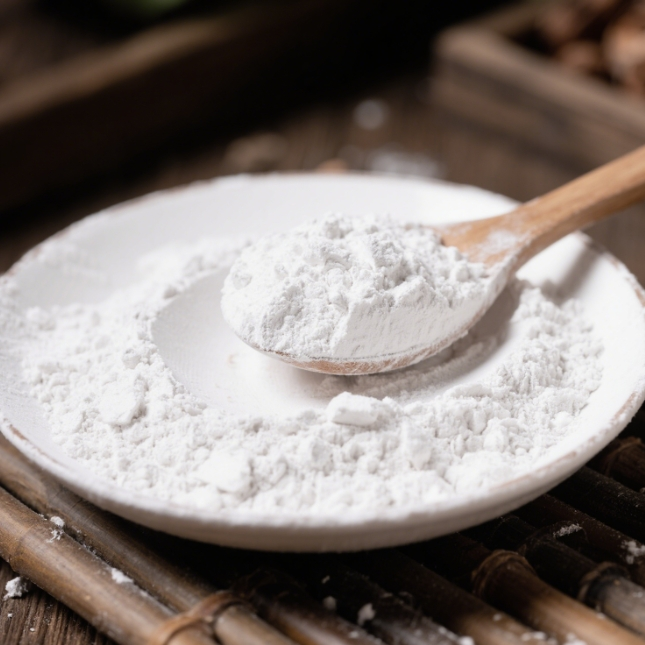
Calcium oxide plays a vital role in reducing air pollution through flue gas desulfurization (FGD). Power plants and industrial facilities burn fossil fuels, releasing sulfur dioxide (SO₂), a harmful gas contributing to acid rain. By injecting calcium oxide into the flue gas stream, it reacts with sulfur dioxide to form calcium sulfite or calcium sulfate, compounds that can be removed easily. This reaction helps clean emissions before they reach the atmosphere, significantly lowering environmental damage.
The general reaction is:
CaO + SO₂ + ½ O₂ → CaSO₄
This process not only reduces air pollution but also produces gypsum, a useful byproduct in construction materials such as drywall.
When applied to soil, calcium oxide acts as a powerful liming agent. It neutralizes acidic soils by increasing soil pH, making the environment more favorable for plant growth. Acidic soils can stunt crop development and reduce nutrient availability. Adding calcium oxide raises pH quickly by reacting with water in the soil to form calcium hydroxide, which then neutralizes acids.
However, excessive use can over-alkalize soil, harming plants and beneficial microorganisms. Therefore, precise dosage and soil testing are essential before application. Calcium oxide's ability to improve soil structure and fertility has made it popular in agriculture, but it requires careful management to avoid negative effects.
Calcium oxide must be handled carefully to minimize environmental risks during disposal. Because it reacts vigorously with water and carbon dioxide, improper storage or disposal can lead to hazardous conditions, including heat generation and release of dust or alkaline runoff. Waste containing calcium oxide should be neutralized or stabilized before disposal.
Industries often recycle calcium oxide residues or convert them into less reactive compounds like calcium carbonate or calcium hydroxide. In landfills, containment measures prevent leaching of alkaline substances into groundwater. Proper waste management ensures calcium oxide’s environmental benefits outweigh potential risks.
Quicklime and slaked lime are closely related but distinct compounds derived from limestone. Quicklime is calcium oxide (CaO), produced by heating limestone to drive off carbon dioxide. It appears as a white or grayish-white solid, usually in lumps or powder form.
Slaked lime, on the other hand, is calcium hydroxide (Ca(OH)₂). It forms when quicklime reacts with water in an exothermic reaction, producing a soft, white powder or a milky suspension known as limewater. This transformation is called slaking.
The key difference lies in their chemical composition and physical state: quicklime is an oxide, highly reactive and basic, while slaked lime is a hydroxide, less reactive and more stable in water.
The conversion between quicklime and slaked lime involves straightforward chemical reactions:
● Formation of quicklime by calcination of limestone:
CaCO₃ (s) + heat → CaO (s) + CO₂ (g)
● Slaking of quicklime by adding water:
CaO (s) + H₂O (l) → Ca(OH)₂ (s) + heat
This second reaction releases a significant amount of heat, which can cause boiling or splattering if water is added too quickly. Slaked lime can further react with carbon dioxide in the air to form calcium carbonate again:
Ca(OH)₂ (s) + CO₂ (g) → CaCO₃ (s) + H₂O (l)
This cycle highlights the reversible nature of these compounds under certain conditions.
Both quicklime and slaked lime have broad industrial and environmental applications, but their uses differ based on their properties.
Quicklime (Calcium Oxide):
● Used as a flux in steelmaking to remove impurities.
● Employed in cement and mortar production.
● Applied in soil stabilization to improve load-bearing capacity.
● Used in water treatment to soften water and neutralize acidity.
● Acts as a reagent in chemical manufacturing.
Slaked Lime (Calcium Hydroxide):
● Used to neutralize acidic soils more rapidly than limestone.
● Applied in water treatment for pH adjustment and coagulation.
● Employed in the food industry for processing, such as nixtamalization.
● Used in environmental applications to treat wastewater and flue gases.
● Serves in construction for plaster and whitewash.
Understanding these differences helps industries select the right form of lime for their processes, ensuring efficiency and safety.
Calcium oxide, derived from limestone, is vital across industries, enhancing construction, water treatment, and metallurgy. Its future in industry remains promising due to its versatility and efficiency. Hongyu's commitment to delivering high-quality calcium oxide ensures optimal performance in various applications, providing significant value to customers. As industries continue to innovate, the importance of calcium oxide and limestone will undoubtedly grow, solidifying their role as essential materials in modern development.
A: Calcium oxide, known as quicklime, is produced by heating limestone, which contains calcium carbonate. This process releases carbon dioxide and leaves calcium oxide.
A: Calcium oxide is crucial in construction for making cement, mortar, and concrete. It reacts with water to form calcium hydroxide, which hardens and strengthens building materials.
A: Calcium oxide neutralizes acidic water, softens hard water, and removes impurities, making it vital for municipal and industrial water treatment.
A: Calcium oxide acts as a liming agent to neutralize acidic soils, improving soil fertility and crop yields.
A: Calcium oxide is an oxide and highly reactive, while slaked lime is a hydroxide, less reactive and stable in water, used for different applications like soil treatment.


