close
Choose Your Site
Global
Social Media

Views: 0 Author: Site Editor Publish Time: 2026-08-19 Origin: Site
Formulating high-performance polymers is an unforgiving process. Even tiny amounts of trapped moisture can ruin entire production runs before you realize a problem exists. Formulating rubber and plastics requires strict moisture control to prevent blistering, porosity, and structural degradation during curing or extrusion. Selecting an incorrect grade of calcium oxide leads to poor dispersion, inconsistent batch quality, and potential equipment damage. When manufacturers compromise on raw materials, they risk severe compounding failures and costly scrap rates. Our objective is to provide technical buyers and compounders an objective framework. We will help you evaluate, shortlist, and safely implement the correct calcium oxide grade for your specific polymer application. You will learn how to differentiate between chemical purities, evaluate particle sizes, and choose the right surface treatments. We will also explore critical guidelines for environmental, health, and safety compliance.
Standard industrial quicklime is rarely suitable for advanced polymers; specialized grades are required to ensure optimal dispersion and avoid localized defects.
Particle size and surface treatments are just as critical as chemical purity when evaluating a plastic additive calcium oxide.
Rubber grade calcium oxide must balance delayed moisture scavenging with predictable curing times.
Proper packaging and environmental, health, and safety (EHS) compliance are non-negotiable criteria when shortlisting B2B suppliers.
Calcium oxide functions as a highly aggressive chemical desiccant. It triggers a predictable exothermic reaction upon encountering free moisture. The compound chemically binds water molecules to form calcium hydroxide. This permanent conversion process locks moisture away securely. It prevents water from vaporizing into steam during high-temperature processing. Steam generation remains the primary cause of internal defects in polymer manufacturing. By acting as a moisture scavenger, the additive eliminates this threat entirely. You maintain total control over the internal structure of your compound. The reaction happens quickly, but operators can control it using specific surface treatments.
Porosity presents a massive challenge during continuous vulcanization. Manufacturers routinely extrude EPDM profiles, automotive hoses, and industrial belts under intense heat. If residual moisture remains inside the rubber matrix, it expands rapidly into gas. This expansion creates visible blisters on the surface. It also forms invisible internal voids. These voids compromise the structural integrity of the final product. A stressed rubber belt will snap prematurely at these weak points. Precise moisture scavenging eliminates these flaws. Operators achieve smooth, dense extrusions consistently. You avoid costly rework and minimize rejected batches.
Moisture control is equally critical in modern plastic formulations. Recycled plastics often carry high levels of residual humidity from washing processes. Manufacturers also rely heavily on hygroscopic fillers today. Wood-plastic composites utilize wood fibers. These fibers absorb ambient moisture aggressively. Adding calcium oxide for plastics neutralizes this water before extrusion begins. It stabilizes the melt flow entirely. The polymer matrix remains strong and uniform. Without this intervention, operators face severe foaming issues at the die head. The plastic surface becomes rough, brittle, and visually unacceptable.
A successful additive integration delivers measurable results immediately. You achieve a perfectly void-free surface finish. Your final product maintains uncompromised mechanical strength. Tensile strength and tear resistance metrics remain stable across different production runs. Operators experience predictable rheology inside the extruder. This consistency allows your team to standardize machine temperature settings safely. It ultimately reduces machine downtime and lowers your overall scrap rates. True success means the additive performs its job invisibly.
You must establish a baseline of high chemical purity for any polymer formulation. Premium grades typically range between 95% and 99% active calcium oxide. Lower industrial grades often contain high levels of magnesium oxide. They also carry trace heavy metals. These impurities pose significant risks to your compounding process. Magnesium oxide reacts much slower than calcium oxide. It leaves dangerous residual moisture behind. Heavy metals can catalyze unwanted side reactions during vulcanization. They degrade the polymer backbone prematurely. High purity ensures consistent desiccant performance. You protect the core chemistry of your final product.
Uniform dispersion relies entirely on tight particle size control. Ultra-fine micro-particles blend seamlessly into complex polymer matrices. We typically look at D50 and D90 metrics to evaluate size. Fine powders maximize the available surface area for moisture scavenging. Conversely, coarse particles spell disaster for thin films or extruded profiles. Large particles fail to disperse properly. They agglomerate and create concentrated "hot spots." These spots become severe structural weak points. If a customer bends or stretches the plastic, it will fracture exactly at the site of a coarse particle.
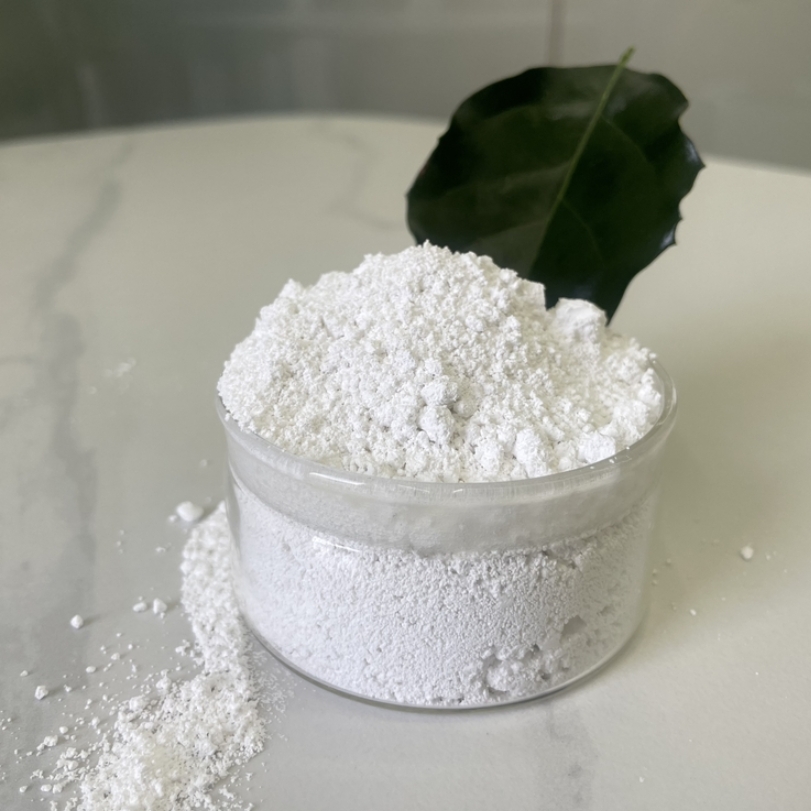
Color-sensitive compounds demand strict aesthetic baselines. Clear, white, or lightly pigmented plastics show contamination very easily. Standard quicklime often carries a gray or yellowish tint due to raw limestone impurities. You should actively specify high whiteness quicklime for these delicate applications. High whiteness grades boast excellent light-reflectance values. They work synergistically alongside common pigments like titanium dioxide. They preserve your intended color matching effortlessly. You avoid the heavy costs of adding extra pigment to hide graying effects. Aesthetic control remains crucial for consumer-facing goods.
Raw, uncoated calcium oxide powder provides immediate, highly reactive moisture scavenging. It remains a highly cost-effective solution for many bulk applications. It activates the moment it contacts water. However, this immediate reactivity introduces distinct challenges on the factory floor. Operators find it difficult to handle due to excessive dusting. The powder hydrates prematurely if ambient humidity penetrates the storage area. In sensitive rubber compounds, this immediate reactivity causes severe issues. It can trigger early scorch during the mixing phase. You must weigh these handling risks carefully against the initial cost savings.
Manufacturers often coat specialized grades in naphthenic oil or specific wax dispersions. These coatings physically block ambient moisture from reaching the active core. They offer delayed reactivity. The wax melts only when the compound reaches specific processing temperatures inside the extruder. This controlled release guarantees superior dispersion into the polymer matrix. Coated variants also eliminate dust, offering much safer handling for your operators. The main drawbacks include a higher upfront procurement cost. You must also verify compatibility. Some base resins might react poorly to specific wax or oil carriers.
We can evaluate these trade-offs using a standardized comparison framework. This helps technical buyers align material properties with their exact factory capabilities.
Calcium Oxide Formulation Solutions Chart
Feature | Uncoated Powder | Surface-Treated / Coated Grades |
|---|---|---|
Reactivity Speed | Immediate upon moisture contact. | Delayed until processing temperatures melt the coating. |
Dispersion Quality | Prone to agglomeration if dust clumps. | Excellent uniform integration into polymer matrices. |
Handling Safety | High dust generation; requires strict PPE. | Low dust; safer for operators and equipment. |
Storage Stability | Very poor in humid environments. | High resistance to ambient factory humidity. |
Typical Application | Thick rubber profiles, heavy industrial plastics. | Thin films, weather seals, sensitive thermoplastics. |
Factory floor safety demands strict handling protocols. Mixing raw desiccant powder with atmospheric moisture generates intense exothermic heat. Large localized spills can trigger rapid, dangerous reactions. If a bulk bag gets wet inadvertently, temperatures can spike dramatically. This sudden heat generation can damage adjacent raw materials instantly. It also poses severe thermal burn risks to operators. Facilities must isolate mixing stations from any water sources. Operators must never use water hoses to clean up desiccant dust spills. Dry vacuuming remains the only acceptable cleanup method.
You must align all handling procedures with standard environmental and occupational safety guidelines. Organizations like OSHA strictly regulate airborne alkaline particulates. The Permissible Exposure Limit (PEL) for calcium oxide dust is strictly enforced to protect respiratory health. Inhalation causes severe irritation to the respiratory tract. Operators must wear proper personal protective equipment (PPE). This includes rated dust masks, goggles, and chemical-resistant gloves. Dust extraction systems must run continuously near all active mixing stations. Compliance prevents costly regulatory fines and protects your workforce effectively.
You cannot ignore transparent assumptions about shelf-life. Exposure to ambient humidity degrades the active product instantly. Evaluating a supplier's packaging strategy matters just as much as checking their chemical specifications. Look for specialized moisture-barrier bags. Aluminum foil-lined sacks or vacuum-sealed liners provide excellent protection. Standard paper sacks fail quickly in humid manufacturing environments. Some suppliers offer low-melt EVA bags. Operators throw these unopened bags directly into the internal mixer. This completely eliminates dust exposure and preserves maximum chemical reactivity until the exact moment of mixing.
Marketing claims rarely tell the full technical story. You must scrutinize the Technical Data Sheet (TDS) independently. Look closely at the exact test methods used by the manufacturer. Reliable suppliers list specific ASTM or ISO standard references for measuring reactivity and particle size. Check the titration methods used to determine active CaO content. Investigate how they measure particle distribution. Clear documentation indicates a rigorous internal quality control program. Avoid suppliers who provide vague specification ranges. Tight numerical tolerances prove they control their manufacturing process accurately.
Manufacturing stability separates adequate suppliers from exceptional partners. You should always request Certificates of Analysis (COA) for several consecutive historical batches. You need hard proof they maintain tight tolerances over time. Evaluating a plastic additive calcium oxide requires long-term predictability. If purity levels or particle sizes fluctuate wildly between shipments, your compounding recipes will fail. Consistency guarantees you will not have to tweak extruder settings every time a new pallet arrives on your factory floor.
We recommend a systematic approach before committing to bulk procurement. Follow these steps to validate your shortlisted options:
Request Small-Batch Samples: Obtain 5kg to 10kg samples of both coated and uncoated variants.
Conduct Pilot Runs: Test specific moisture-scavenging rates within your proprietary polymer compound using a laboratory rheometer.
Analyze the Finish: Extrude sample profiles and physically inspect them for micro-porosity under magnification.
Measure Mechanical Strength: Perform standard tensile and tear resistance tests to ensure the additive has not compromised the polymer backbone.
Transitioning to a specialized rubber grade calcium oxide or plastic-specific additive represents a highly strategic investment. Standard industrial quicklime simply cannot meet modern compounding tolerances. Upgrading your raw materials drastically reduces scrap rates. It directly improves the structural integrity of your finished goods. It also streamlines your extrusion processes by providing predictable, stable rheology.
Audit your current scrap rates closely to identify moisture-related defects.
Align your specific curing temperatures and base polymers with the supplier's technical support team.
Test both uncoated and surface-treated samples thoroughly in small pilot runs.
Verify all safety data sheets (SDS) to ensure total facility EHS compliance before scaling up production.
A: Standard industrial quicklime targets construction or steelmaking uses. It often contains coarse particles and impurities like heavy metals. Rubber grade variants feature ultra-fine particle sizes, strict chemical purity controls, and specialized dispersion agents. These specific traits ensure seamless polymer integration and prevent localized structural defects during vulcanization.
A: Standard industry dosing typically ranges from 1% to 10% by total weight. The exact amount depends entirely on the inherent moisture levels of your raw materials and hygroscopic fillers. Recycled plastics usually require higher dosing. You must avoid over-dosing, as excessive desiccant amounts can cause severe brittleness.
A: High whiteness grades are critical for clear or light-colored plastics to prevent unwanted yellowing. However, their aesthetic impact is negligible in carbon-black filled rubber or heavily pigmented dark plastics. In dark formulations, standard color grades perform perfectly well and help you save on raw material procurement costs.