close
Choose Your Site
Global
Social Media

Views: 0 Author: Site Editor Publish Time: 2026-08-13 Origin: Site
Calcium oxide, commonly known as quicklime, serves as a foundational alkaline chemical across global manufacturing. However, selecting the precise grade and physical format remains a critical operational decision for plant managers. Standardized commodity purchasing often overlooks the nuanced chemical requirements of modern industrial processes.
Subpar lime quality directly disrupts continuous production lines. It negatively impacts product yield. It reduces the lifespan of expensive equipment. It also jeopardizes environmental compliance in heavy industrial applications. Using the wrong specification can lead to catastrophic operational inefficiencies.
You need a rigorous approach to material selection. This article provides an evidence-based framework for evaluating, specifying, and sourcing this essential chemical for continuous industrial production. We will explore key applications, safety protocols, and procurement strategies to optimize your industrial plant processes.
Core function: Acts as a primary fluxing agent, pH regulator, and chemical intermediate across metallurgy, water treatment, and construction.
Specification matters: Reactivity (T60), purity (available CaO), and particle size dictate application suitability and process efficiency.
Implementation reality: Its highly exothermic nature requires strict moisture control, specialized storage, and stringent safety compliance (OSHA/EPA standards).
Procurement logic: Supplier selection must weigh batch consistency, logistical capabilities (pneumatic delivery vs. supersacks), and localized availability.
Industrial plant managers rely on quicklime to solve complex chemical problems. We map specific material features to concrete operational outcomes across four primary sectors.
Steelmaking consumes the majority of global quicklime production. Industrial calcium oxide acts as an indispensable fluxing agent. You will find it in both Basic Oxygen Furnaces (BOF) and Electric Arc Furnaces (EAF). Operators inject it directly into the molten metal bath.
The primary outcome here is impurity removal. The lime reacts with acidic impurities in the molten iron. It targets phosphorus, silica, and sulfur. These reactions form a liquid slag. This basic slag floats on top of the heavier liquid steel. Operators then easily skim it off. Without high-quality lime, steel retains these brittle impurities. This leads to structural failure in the final steel products.
Municipalities and industrial plants use quicklime for advanced water purification. The mechanism relies on aggressive pH adjustment. When added to water, it rapidly forms calcium hydroxide. This sharply raises the alkalinity of the wastewater stream.
This pH spike provides significant business value. It forces dissolved heavy metals to precipitate out of the solution. Metals like lead, copper, and zinc drop into a solid sludge layer. Facilities then remove this sludge safely. This allows plants to meet strict municipal and environmental discharge regulations cost-effectively. It prevents costly environmental fines.
Civil engineers leverage the aggressive moisture-absorbing properties of quicklime. Soil stabilization is a massive use case. When builders encounter wet, clay-heavy soils, they mix in quicklime. The chemical aggressively absorbs the water. It also triggers a pozzolanic reaction with clay minerals.
The outcome is immediate. Waterlogged soils dry out rapidly. The treated soil hardens, drastically improving its load-bearing capacity. This allows heavy equipment to operate on previously unstable ground. Additionally, builders use it to manufacture Autoclaved Aerated Concrete (AAC) blocks. The lime reacts with aluminum powder. This generates hydrogen gas, creating the signature porous structure of lightweight AAC blocks.
The pulp and paper industry relies heavily on this chemical. It drives the kraft pulping process. Plants use it in the recausticizing cycle. They mix quicklime with green liquor (sodium carbonate). This regenerates white liquor (sodium hydroxide). White liquor is essential for breaking down wood chips into pulp.
Furthermore, it serves as a vital chemical intermediate. Manufacturers use it to synthesize other calcium-based compounds. These include calcium carbide, calcium stearate, and precipitated calcium carbonate. Exploring these diverse calcium oxide applications reveals its unmatched versatility across global supply chains.
Not all lime is created equal. You must evaluate specific chemical and physical dimensions. This ensures the material matches your objective decision frameworks.
Purity dictates process efficiency. You must look at the "Available CaO" metric on any specification sheet. High-calcium quicklime contains greater than 90% active calcium oxide. In contrast, dolomitic lime contains significant levels of magnesium oxide (MgO).
High purity is often non-negotiable. For instance, BOF steelmaking requires high-calcium lime. Magnesium oxide does not capture phosphorus effectively. If you substitute dolomitic lime in a BOF process, your steel quality plummets. Conversely, some EAF operators prefer slight MgO levels. It helps protect the furnace's refractory brick lining from chemical wear.
Reactivity measures how fast the lime reacts with water. Industry standards often use the T60 test. This metric tracks how many minutes it takes for a slaking mixture to reach 60 degrees Celsius. The speed of this exothermic reaction directly impacts your process cycle times.
Highly reactive lime slakes in under two minutes. You need this for rapid water treatment processes. It delivers immediate pH spikes. Medium-reactive lime takes up to ten minutes. Dead-burned lime undergoes extreme heating during manufacturing. It has almost zero reactivity. Operators use dead-burned lime exclusively for refractory and heat-resistant applications.
Table: Standard Industrial Reactivity Profiles (T60 Metric)
Reactivity Class | T60 Time (Minutes) | Primary Industrial Use Case | Exothermic Heat Release |
|---|---|---|---|
High Reactivity | < 2.0 | Water treatment, Chemical synthesis | Aggressive, Rapid |
Medium Reactivity | 2.0 - 10.0 | Soil stabilization, General metallurgy | Moderate, Sustained |
Low Reactivity | 10.0 - 30.0 | Specialty mortars, AAC block | Slow, Controlled |
Dead-Burned | > 30.0 | Refractory bricks, Furnace lining | Negligible |
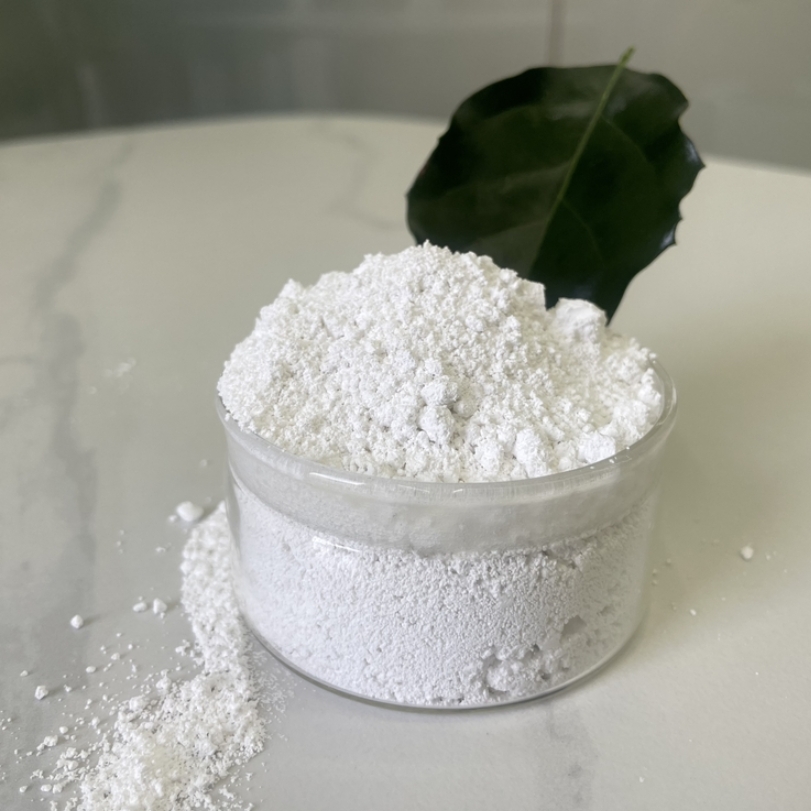
Physical size changes handling requirements. Quicklime powder offers massive surface area. This guarantees maximum reaction speed. However, fine powder generates significant airborne dust. It requires enclosed, pneumatic handling systems.
Alternatively, pebble or granular lime ranges from 10mm to 50mm. Pebble lime produces far less dust. It is easier to transport on open conveyor belts. However, it slakes much slower due to the reduced surface area. You must match the physical form to your existing feeder infrastructure. Using powder in a system designed for pebbles leads to immediate equipment clogging and silo bridging.
Experience shows that poor handling ruins equipment and injures workers. You must respect the chemical realities of this material. Implementation success requires rigorous safety and compliance frameworks.
Ambient moisture is your biggest enemy. Calcium oxide reacts violently with water. This hydration process releases massive amounts of heat. If bulk powder gets wet in a confined space, temperatures can exceed 300 degrees Celsius. This heat easily ignites nearby combustible materials.
Furthermore, the chemical expands during hydration. It transforms into slaked lime powder. This volume expansion frequently ruptures sealed storage containers. Unintended water ingress in a storage silo causes structural failure. You must design facilities to keep this material absolutely dry.
Worker safety requires strict adherence to environmental protocols. OSHA and EPA guidelines classify quicklime as a hazardous, caustic substance. When airborne, the dust reacts with sweat on human skin. It reacts with moisture in the eyes. It reacts with lung tissue. This causes severe chemical burns.
You must mandate proper personal protective equipment (PPE). Workers require full-seal goggles, heavy-duty nitrile gloves, and NIOSH-approved respirators. Standard dust masks offer zero protection against caustic burns. Facilities must install active dust mitigation systems. Vacuum extraction units should surround all transfer points.
You cannot store this material in standard grain silos. It demands specialized infrastructure. Silos must be fully sealed and moisture-proof. We recommend equipping them with desiccant breather valves. This prevents ambient humidity from entering as the silo empties.
Pneumatic transfer lines offer the safest movement method. They keep the chemical enclosed from the delivery truck to the processing reactor. Poorly sealed systems allow atmospheric carbon dioxide and moisture to enter. This degrades the reactive oxide into stable calcium carbonate and calcium hydroxide. Degraded material ruins your production efficiency.
Procurement goes beyond comparing price per ton. You must evaluate logistics, quality assurance, and regional availability. Shortlisting the right vendor ensures uninterrupted production cycles.
Your consumption rate dictates your delivery format. Large steel mills and paper plants require massive volumes. They source bulk calcium oxide via pneumatic tanker trucks or railcars. These trucks pump the powder directly into plant silos using pressurized air. This offers unmatched scalability and zero manual handling.
Mid-sized operations often choose 1-ton Flexible Intermediate Bulk Containers (FIBCs). We call these supersacks. Supersacks require forklifts and specialized bag-breaking hoppers. While they lower initial infrastructure costs, they increase labor and dust exposure risks. Evaluate your total consumption before finalizing a delivery format.
Consistent chemistry is vital. You must scrutinize a supplier’s Certificate of Analysis (CoA) for every batch. Do not just look at the available CaO percentage. You must check the trace impurities.
Inconsistent sulfur or silica levels in raw limestone ruin the final quicklime product. If your supplier delivers a batch with high silica, it will alter your slag chemistry in the furnace. Look for suppliers who own their limestone quarries. Vertically integrated suppliers offer far superior batch-to-batch consistency compared to open-market brokers.
Quicklime is a high-volume, low-margin commodity. It is heavily sensitive to freight costs. Shipping it across the country destroys your budget. Furthermore, extended transit times increase the risk of atmospheric degradation.
Therefore, localized availability is a critical evaluation metric. You should map regional supplier networks within a 200-mile radius of your facility. Shorter transit ensures you receive highly reactive, uncompromised material. It also minimizes supply chain disruptions during regional weather events.
Mastering industrial procurement requires deep technical understanding. You must move beyond basic application knowledge. You need to scrutinize purity levels, reactivity rates, and physical granulometry. Matching these specifications to your existing infrastructure guarantees production efficiency.
Furthermore, respecting the thermal and caustic risks ensures worker safety. Investing in sealed, pneumatic storage prevents costly material degradation. Choosing the right regional supplier locks in your freight economics.
Your next step is clear. Audit your current process reactivity requirements today. Contact your engineering team to define exact T60 and purity needs. Then, request technical specification sheets and pilot samples from shortlisted regional suppliers. Testing these samples in controlled environments validates their performance before you commit to bulk contracts.
A: Calcium oxide (quicklime) is the unslaked, highly reactive precursor. It generates intense heat when mixed with water. Calcium hydroxide (slaked lime) is the hydrated, more stable byproduct. Industries use hydroxide when they need alkalinity but cannot tolerate the volatile exothermic reactions associated with unslaked lime.
A: Moisture triggers a violent hydration reaction. The material generates extreme heat, expanding up to 2.5 times its original volume. This volume expansion frequently bursts silos and storage bags. Furthermore, moisture exposure ruins the chemical's reactive efficacy, turning it into useless slaked powder before it reaches your process.
A: Shelf life depends entirely on storage conditions. In poorly sealed bags exposed to ambient humidity, it degrades in under 30 days. In strict, airtight, and moisture-controlled bulk silos, it remains viable for 60 to 90 days. You must prioritize fast inventory turnover to maintain peak reactivity.
A: It depends strictly on your process tolerance for magnesium oxide (MgO). Dolomitic lime contains high MgO levels. In EAF steelmaking, this protects furnace linings. However, in BOF steelmaking or municipal water treatment, high MgO reduces efficiency and fails to capture targeted impurities. Always verify your chemical tolerances first.