close
Choose Your Site
Global
Social Media

Views: 0 Author: Site Editor Publish Time: 2026-08-25 Origin: Site
Procurement and engineering teams often face inconsistent batch quality when sourcing quicklime. You might order a batch expecting high performance, only to encounter process inefficiencies and unexpected safety hazards on the production floor. Selecting the right material requires careful balance. You must weigh raw material expenses against expected process yield, stringent reactivity requirements, and rigid impurity tolerances. A generic approach simply does not work.
This guide provides a standardized framework to help you evaluate technical data sheets (TDS) effectively. We will break down how to assess critical parameters like reactivity, physical formats, and impurity caps. You will also learn practical steps to vet suppliers for long-term commercial viability. By the end, you will know exactly how to match the right calcium oxide specification to your facility’s unique infrastructure.
Purity isn't the only metric: While total CaO content matters, available CaO and specific impurity caps (e.g., silica, magnesia) often dictate application success.
Reactivity drives throughput: Quicklime activity (slaking rate) must align with your processing equipment to prevent bottlenecks or unreacted material waste.
Physical form dictates handling: Calcium oxide particle size impacts both reaction kinetics and environmental safety (dust control/exothermic risks).
Audit the source: A reliable calcium oxide manufacturer must demonstrate consistency from their raw limestone quarry to their final kiln calcination processes.
Buyers often assume higher purity automatically guarantees better results. This misconception leads many facilities to overpay for industrial chemicals. We must define what purity actually means for your specific operational context.
Demanding a baseline 98%+ calcium oxide purity is often cost-prohibitive. It remains entirely unnecessary for industries like bulk soil stabilization or basic wastewater neutralization. In these sectors, minor impurities do not disrupt the primary chemical reaction. Paying a premium for ultra-high purity drains your materials budget.
Conversely, fine chemicals, pharmaceutical precursors, and aerospace metallurgy demand these strict purity levels. Even a fractional percentage of foreign minerals can ruin a high-value batch in these specialized fields. You must align your purity requirements strictly with your end-use application.
Technical data sheets commonly list "Total CaO." You should view this number with caution. Total calcium oxide includes both the reactive lime and unreactive compounds trapped within the mineral matrix. These unreactive portions often include calcium bound to silicates or uncalcined calcium carbonate.
You need to focus on "Available CaO." This metric measures the chemically active portion of the quicklime. Available CaO determines how much of the product will actually participate in your hydration or neutralization reactions. A product showing 95% Total CaO might only offer 88% Available CaO. You base your process yield calculations entirely on the available portion.
Raw limestone naturally contains trace minerals. The calcination process concentrates these impurities. You must evaluate how specific contaminants interact with your process.
Silica (SiO2) & Alumina (Al2O3): These oxides heavily impact slag formation. In steelmaking, excessive silica alters slag viscosity and lowers desulfurization efficiency. We typically cap these impurities below 1.5% for metallurgical applications.
Magnesium Oxide (MgO): Magnesium behaves differently than calcium during hydration. It slakes much slower. In water treatment and paper manufacturing, excess MgO causes severe scaling inside pipes and reactor vessels. You should maintain MgO limits below 1% to prevent chronic maintenance issues.
Iron Oxide (Fe2O3): Iron introduces strong pigmentation. Glass manufacturers and ceramic glaze producers require incredibly strict tolerances for iron oxide. Even 0.1% Fe2O3 can cause unwanted green or brown discoloration in final transparent products.
Reactivity dictates how violently and quickly the quicklime reacts with water. In a commercial context, we measure this by recording the time it takes a specific mass of quicklime to reach maximum temperature during hydration. This exothermic reaction defines the slaking rate.
You should look for standardized evaluation methods on the TDS. The ASTM C110 standard provides reliable benchmarks. It uses T60 and T40 metrics. T60 represents the time required for the slurry temperature to rise by 60 degrees Celsius. A lower T60 value indicates highly reactive lime.
You must match the quicklime activity to your processing equipment. Using mismatched reactivity leads to incomplete reactions, wasted material, or dangerous thermal runaways.
Quicklime Reactivity Decision Matrix
Reactivity Level | Typical T60 Time | Primary Application Profile | Equipment Consideration |
|---|---|---|---|
High Reactivity | Under 3 minutes | Immediate neutralization (Water treatment, pH adjustment) | Requires rapid agitation to prevent localized boiling. |
Medium Reactivity | 3 to 6 minutes | General chemical processing, fiberglass manufacturing | Standard slakers handle this thermal load well. |
Low Reactivity | Over 6 minutes | Autoclaved aerated concrete (AAC), soil stabilization | Needs prolonged residence time; prevents premature setting. |
Physical formats drastically alter how you handle the material. You generally choose between pulverized powder, granular forms, and pebble or lump lime.
Your choice of calcium oxide particle size directly impacts reaction kinetics and workplace safety. We face distinct trade-offs for each form.
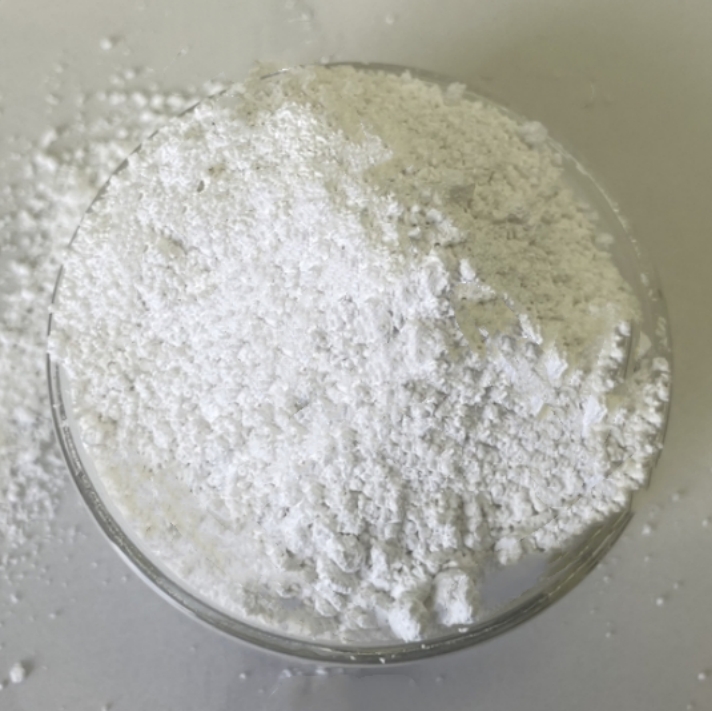
Pulverized powders offer maximum surface area. They deliver the fastest possible reaction rates. However, powders present severe dust and inhalation risks. You must utilize fully enclosed pneumatic conveying systems to handle them safely. Powders also suffer from bridging and ratholing inside storage silos if exposed to minimal moisture.
Granular and pebble forms flow much easier. They generate significantly less dust, making them easier to store and transport via standard mechanical conveyors. The trade-off is reaction speed. Larger lumps possess less exposed surface area. You will require dedicated on-site slaking infrastructure, like ball mill slakers, to break down the pebbles and achieve a complete chemical reaction.
Generic specifications rarely satisfy regulatory requirements. You must view prospective products through the lens of industry-specific standards. Regulatory compliance acts as your primary safeguard against catastrophic batch failures.
Water Treatment Protocols: Municipal water facilities must demand compliance with AWWA B202 standards. This standard scrutinizes the available CaO content and the slaking speed. It guarantees the lime will effectively soften water and stabilize pH without introducing harmful insoluble grit into public water systems.
Chemical and Metallurgical Demands: Industrial processing requires strict adherence to ASTM C911. This framework focuses heavily on limiting deleterious elements. You must request documented heavy metal testing. Trace amounts of lead or arsenic can ruin metallurgical alloys or contaminate downstream chemical synthesis.
Agricultural and Food-Grade Requisites: Treating soil for crops or processing food items (like sugar refining) introduces human health variables. You must highlight necessary governmental compliance. Look for USDA or FDA GRAS (Generally Recognized As Safe) status. If dealing with organic farming, require an Organic Materials Review Institute (OMRI) certificate. These standards guarantee the absolute absence of toxic trace elements.
Sourcing the perfect chemical specification means nothing if the material degrades before it reaches your reactor. Calcium oxide demands aggressive logistical controls. It is a temperamental material that interacts violently with its environment.
Calcium oxide remains highly hygroscopic. It actively pulls moisture from the ambient air. Premature atmospheric exposure triggers an immediate chemical change. The quicklime degrades into calcium hydroxide (slaked lime). This degradation creates two major problems.
First, it dilutes the active chemistry, destroying your calculated process yields. Second, the hydration process releases intense exothermic heat. If moisture enters a bulk storage container, the resulting heat can easily ignite surrounding combustible materials. You must treat moisture contamination as a critical safety hazard.
You must establish rigid baseline requirements for bulk sourcing. Never accept standard woven sacks for quicklime. For smaller industrial loads, demand moisture-proof Flexible Intermediate Bulk Containers (FIBCs). These ton bags must include thick, sealed polyethylene internal liners.
For high-volume continuous operations, mandate sealed pneumatic bulk tankers. These trucks transfer the material directly into your silos using dry, compressed air. This closed-loop system entirely prevents atmospheric exposure during offloading.
Procurement teams often chase volume discounts by ordering massive shipments. We advise against this practice for quicklime. You face immense financial risk when over-ordering.
Calcium oxide possesses a notoriously short functional shelf life. Depending on the ambient humidity and storage silo integrity, it often degrades within 30 to 90 days. Once ambient moisture degrades its active specification, the material becomes useless for high-precision applications. You should implement just-in-time inventory practices to ensure peak chemical reactivity.
A specification sheet only reflects a single moment in time. You need reliable performance across years of deliveries. Vetting your supplier determines your long-term success.
Quality begins at the quarry. You should ask suppliers directly about their limestone deposit sources. Geological deposits dictate the baseline impurities. A calcium oxide manufacturer relying on multiple, varied quarries will struggle to provide consistent chemistry. Consistent geological deposits equal consistent batch-to-batch impurities.
The calcination equipment drastically influences the final product. You must differentiate between kiln types.
Rotary Kilns: These horizontal, rotating cylinders tumble the limestone continuously. They expose the stone evenly to heat. This produces quicklime with higher, more consistent reactivity. We recommend rotary kiln products for sensitive chemical applications.
Vertical Shaft Kilns: These static, upright kilns allow gravity to pull the stone down through heat zones. They often produce variable reactivity because the heat distribution remains uneven. However, they consume less fuel, potentially lowering your purchase price. They suit applications like bulk soil stabilization well.
Marketing brochures often list generic, historical TDS ranges. These ranges represent what the plant is capable of producing, not necessarily what they shipped to you today. Shortlist manufacturers who willingly provide batch-specific Certificates of Analysis (COA) for every delivery. This document proves they tested your exact shipment before it left their facility.
Never commit to bulk tonnage contracts based solely on paperwork. You should request a representative 1kg to 5kg sample. Run this sample through your in-house lab. Conduct your own slaking tests. Verify the grit content and settling rate. Real-world testing prevents catastrophic production shutdowns.
The cheapest cost-per-ton often creates a costly illusion. Procurement teams frequently discover that bargain quicklime results in higher operational expenses. If the activity level, particle size, or impurity profile misaligns with your facility's infrastructure, you will pay the difference in clogged pipes, rejected batches, and increased safety risks.
We recommend a highly targeted approach. Prioritize a specification that guarantees a high percentage of "available CaO." Focus on predictable reactivity over a generic high-purity claim. Understand how your storage logistics dictate the physical format you can safely handle.
Take action today by reviewing your current supplier agreements. Encourage your procurement teams to request a detailed, batch-specific COA from their prospective supplier. Compare that data meticulously against your specific equipment tolerances before signing the next annual contract.
A: Total CaO includes all calcium oxide present, even the portions chemically bound to impurities like silicates or unburnt carbonates. Available CaO measures only the active, free calcium oxide capable of reacting with water or acids. You should always base process yields on available CaO.
A: Particle size determines the exposed surface area. Fine powders provide massive surface area, resulting in rapid, aggressive slaking and instant heat generation. Granular or pebble forms react much slower and require mechanical agitation to break down the material for complete hydration.
A: Calcium oxide is highly hygroscopic. It absorbs moisture from the air, causing premature hydration. This converts the quicklime into calcium hydroxide (slaked lime). This degradation destroys the material's reactivity and alters its chemical profile. Proper sealed storage prevents this.
A: Acceptable levels depend on the application. For general chemical processing and water treatment, MgO should remain below 1% to prevent scaling. SiO2 is usually kept below 1.5% to prevent unwanted slag formation or abrasive grit accumulation in reactor vessels.
A: You should request a batch-specific Certificate of Analysis (COA) detailing the slaking rate. Verify it by running an in-house lab test following ASTM C110 standards. Measure the T60 time (time to reach a 60-degree Celsius rise) to confirm the reactivity matches your equipment needs.