
close
Choose Your Site
Global
Social Media

Views: 0 Author: Site Editor Publish Time: 2025-06-19 Origin: Site
Calcium carbonate is one of the most important and widely used mineral compounds across multiple global industries. From construction and pharmaceuticals to paper and plastic manufacturing, this compound plays a crucial role in enhancing product properties, reducing costs, and supporting environmental sustainability. But there's one recurring question that both scientists and industry professionals often ask: Is calcium carbonate soluble in water?
In this comprehensive guide, we’ll explore the solubility of calcium carbonate, how it varies by form (including precipitated, ground, and nano calcium carbonate), why solubility matters in real-world applications, and how to choose the right product for your needs.
Whether you're a researcher, formulator, manufacturer, or buyer, this article is designed to deliver value, answer high-intent queries, and guide you toward smarter decisions about using calcium carbonate in your processes.
Calcium carbonate (CaCO₃) is a naturally occurring compound composed of calcium, carbon, and oxygen. It is found in rocks such as limestone, marble, and chalk and is also produced synthetically. It appears as a white, odorless, and tasteless powder or crystalline solid.
Its chemical structure makes it highly stable, and it is used extensively as a filler, pigment, pH regulator, and calcium supplement. You’ll commonly find calcium carbonate in:
Plastics and rubber
Paints and coatings
Pharmaceutical tablets (e.g., calcium carbonate 600 mg)
Paper and packaging
Construction materials
Agricultural soil amendments
No, calcium carbonate is not readily soluble in water.
At room temperature, the solubility of calcium carbonate in pure water is very low—approximately 0.013 grams per liter. This classifies it as “practically insoluble” under standard solubility definitions.
When calcium carbonate is added to water, only a tiny amount dissolves, and the rest remains suspended or settles to the bottom. This low solubility is due to its ionic lattice structure, which is strongly held together and resists dissociation in neutral pH water.
However, solubility can increase under certain conditions, such as:
In the presence of carbon dioxide (forming calcium bicarbonate)
In acidic environments
At elevated temperatures (to a limited extent)
To understand why calcium carbonate is poorly soluble, we need to consider its chemical behavior:
Lattice Energy: The energy that holds calcium ions (Ca⊃2;⁺) and carbonate ions (CO₃⊃2;⁻) together is quite high. Breaking these bonds requires more energy than water molecules can provide.
Low Ionization Tendency: Unlike salts such as sodium chloride, calcium carbonate does not readily dissociate into its ions in water.
pH Sensitivity: Calcium carbonate is more reactive in acidic environments due to its basic nature. In acidic water, it reacts with hydrogen ions and dissolves more readily.
This limited solubility is actually beneficial in many applications, especially where stability and slow release are desired.
Calcium carbonate is available in several different physical and chemical forms, and each behaves slightly differently in water. Let’s compare the solubility and applications of the three most common types: ground calcium carbonate (GCC), precipitated calcium carbonate (PCC), and nano calcium carbonate.
Production: Made by mechanically grinding natural calcium carbonate rocks like limestone or marble.
Particle Size: 1–10 µm typically
Solubility: Very low in water
Key Use Cases: Paper, rubber, plastic fillers, construction materials
Production: Chemically synthesized by reacting calcium hydroxide with carbon dioxide.
Particle Size: Smaller and more controlled than GCC
Solubility: Slightly better than GCC in acidic conditions
Key Use Cases: Printing inks, pharmaceuticals, high-end coatings
Production: Derived using advanced nanotechnology with particle sizes below 100 nm.
Solubility: Still low in neutral water, but better dispersion and reactivity
Key Use Cases: High-performance plastics, medical-grade materials, adhesives, sealants
| Type of Calcium Carbonate | Particle Size | Water Solubility | Best For |
|---|---|---|---|
| Ground Calcium Carbonate | 1–10 µm | Very low | Construction, plastics |
| Precipitated Calcium Carbonate | 0.1–1 µm | Low | Paper, cosmetics, pharma |
| Nano Calcium Carbonate | <0.1 µm | Low (high surface area) | High-performance polymers |
Yes, both temperature and pH significantly influence the solubility of calcium carbonate.
Increasing temperature slightly increases the solubility of calcium carbonate in water, but the effect is minimal.
However, in the presence of CO₂, higher temperatures can lead to the precipitation of calcium carbonate due to loss of dissolved CO₂.
In acidic solutions (low pH), calcium carbonate reacts with hydrogen ions, leading to increased solubility.
In alkaline solutions (high pH), solubility decreases further.
Reaction in acid:
CaCO₃ + 2H⁺ → Ca⊃2;⁺ + CO₂↑ + H₂O
This is why calcium carbonate is often used as an antacid—it neutralizes stomach acid efficiently.
Despite its low solubility, calcium carbonate is incredibly useful. In fact, its insolubility is an asset in many applications:
Pharmaceuticals: Controlled dissolution in the stomach improves bioavailability.
Construction: Inert filler that doesn’t dissolve or deteriorate in rainwater.
Paper Industry: Enhances brightness and opacity without dissolving.
Agriculture: Slowly neutralizes acidic soils over time.
Food Industry: Used as a stable calcium supplement (e.g., calcium carbonate 600 mg pills).
One interesting chemical interaction is the reaction between sodium silicate and calcium carbonate. While these two compounds do not readily react in neutral conditions, at high temperatures or in specialized formulations, they can produce calcium silicate and other byproducts used in ceramics and construction materials.
This reaction is also studied in the context of geopolymer materials and eco-friendly cement alternatives.
When working with calcium carbonate, especially in industrial environments, it's essential to understand the key safety guidelines provided in the calcium carbonate SDS (Safety Data Sheet) .
| Safety Aspect | Description |
|---|---|
| Inhalation | Fine calcium carbonate powder may cause respiratory irritation. Use masks and proper ventilation. |
| Skin/Eye Contact | Generally non-irritating, but avoid prolonged exposure |
| Ingestion | Non-toxic in small amounts; used in food and medicine |
| Storage | Store in dry conditions to avoid clumping |
| CAS Number | Calcium carbonate silicon dioxide CAS No varies by blend/formulation |
Always follow local regulations and safety protocols when handling calcium carbonate in powder form.
The calcium carbonate cost can vary depending on:
Type (GCC is generally cheaper than PCC and nano CaCO₃)
Purity level
Particle size distribution
Surface treatment (e.g., stearic acid coating)
Packaging and logistics
Application-specific customization
While we won’t quote specific pricing here, it’s important to recognize that calcium carbonate price is closely tied to global mining, energy, and transportation costs.
The precipitated calcium carbonate market is experiencing steady growth driven by:
Demand for lightweight polymers
Expansion of the paper and packaging industry
Eco-friendly alternatives to titanium dioxide in coatings
Rising demand for high-purity pharmaceutical excipients
Regions such as Asia-Pacific, especially China, are leading the global production and export of PCC due to abundant limestone reserves and advanced manufacturing.
Selecting the right type of calcium carbonate depends on your application and performance requirements. Let’s look at some scenarios:
| Application | Recommended Product | Why? |
|---|---|---|
| Plastic Filler | Superfine Ground Calcium Carbonate | Improves stiffness and reduces cost |
| Food Supplement | High-Purity PCC or 600 mg Tablets | Meets food-grade standards |
| Medical PVC | Ultra-Fine Nano Calcium Carbonate | High dispersion, safety-certified |
| Coatings & Paints | Precipitated Calcium Carbonate | High whiteness, excellent tinting strength |
| Paper Manufacturing | 98% GCC High Whiteness Powder | Enhances brightness and opacity |
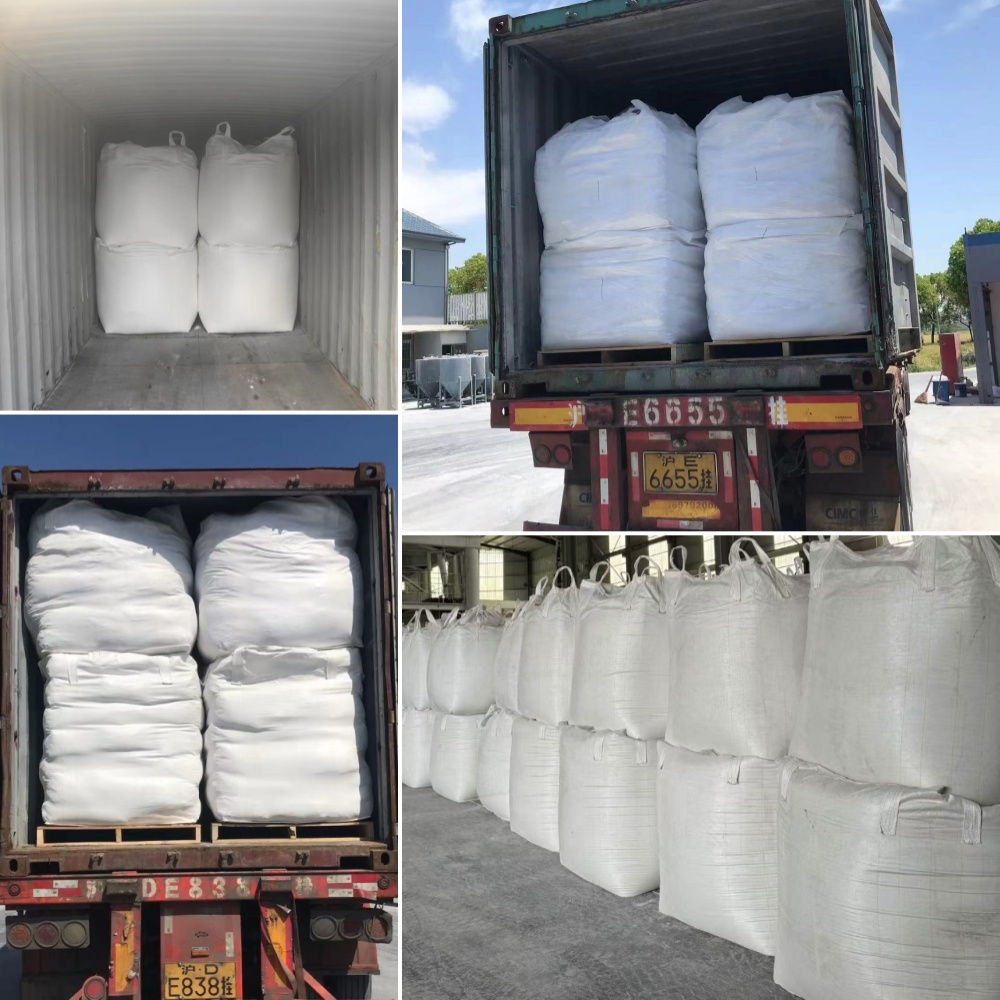
Looking for a trusted supplier? Changshu Hongyu Calcium Co., Ltd. offers a wide range of high-purity calcium carbonate products, including:
Ground Calcium Carbonate (GCC)
Precipitated Calcium Carbonate (PCC)
Nano Calcium Carbonate
Cosmetic-Grade Micro Fine CaCO₃
Construction-Grade CaCO₃
Q1: Is calcium carbonate soluble in water at room temperature?
A1: No, calcium carbonate is practically insoluble in water at room temperature, with a solubility of around 0.013 g/L.
Q2: What affects the solubility of calcium carbonate?
A2: pH, temperature, and the presence of CO₂ affect solubility. Acidic conditions increase solubility, while alkaline environments reduce it.
Q3: Is nano calcium carbonate more soluble than other forms?
A3: Nano calcium carbonate has better dispersion and reactivity due to its surface area, but its actual solubility in water remains low.
Q4: How is calcium carbonate used in pharmaceuticals?
A4: It is used as an antacid and a calcium supplement, typically in 600 mg tablet form, and complies with pharmacopeia standards.
Q5: What is the reaction between sodium silicate and calcium carbonate?
A5: Under specific conditions, they can react to form calcium silicate, which is used in construction and ceramic materials.
Q6: Where can I buy high-quality calcium carbonate for industrial use?
A6: You can source high-purity calcium carbonate products from Changshu Hongyu. They offer GCC, PCC, and nano grades tailored for various applications.
While calcium carbonate is not very soluble in water, its unique chemical properties and affordability make it one of the most valuable mineral fillers in the world. From ground calcium carbonate used in construction to precipitated calcium carbonate in pharmaceuticals and nano calcium carbonate in advanced plastics, the applications are vast and growing.
Understanding its solubility behavior is essential for selecting the right product for your formulation or manufacturing process. Whether you need it for stability, reactivity, or cost-efficiency, calcium carbonate has a solution.
Ready to find the perfect type of calcium carbonate for your business?
Explore premium options at Changshu Hongyu Calcium Co., Ltd. and request a quote today.


