close
Choose Your Site
Global
Social Media

Views: 0 Author: Site Editor Publish Time: 2026-09-03 Origin: Site
Chemical manufacturers often face inconsistent available chlorine levels and poor shelf stability in their final products. This persistent B2B challenge frequently traces back to the primary precursor used during production: hydrated lime. The chlorination process remains highly sensitive to even minor precursor impurities. When you use substandard materials, the chemical reaction inevitably leads to lower yields, increased byproduct formation, and severe environmental compliance risks. You cannot afford these unpredictable production variables in today's competitive export market. To consistently achieve premium 65% or 70% grade products, you must evaluate your calcium hydroxide for calcium hypochlorite as more than just a bulk commodity. Instead, treat it as a critical efficiency and stability driver. This strategic shift in perspective will fundamentally transform your manufacturing outcomes and protect your brand reputation.
Yield Protection: High-purity calcium hydroxide maximizes active chlorine absorption, directly improving batch yield and minimizing inert sludge.
Shelf-Life Preservation: Transition metal impurities (specifically iron and manganese) act as catalysts for decomposition; strict control here is mandatory for product stability.
Sourcing Protocol: Evaluating suppliers requires standardized testing for heavy metals, particle size distribution, and moisture content before scaling production.
In both the sodium process and the calcium process of manufacturing calcium hypochlorite, precursor impurities create immediate operational hurdles. They directly convert into insoluble sludge inside your reactors. Worse, they can trigger rapid exothermic decomposition during the delicate reaction phase. These impurities actively fight against your target yields.
A successful raw material strategy guarantees distinct outcomes. It ensures you consistently attain your target available chlorine levels. Most manufacturers aim for a strict 65% or 70% benchmark. High-quality inputs also leave behind minimal residual calcium carbonate. This promotes highly predictable reaction kinetics across every single batch. When you eliminate raw material variance, your baseline production efficiency naturally stabilizes.
You must clearly understand the heavy cost of compromise. Relying on low-grade hydrated lime for bleaching powder causes cascading failures throughout a plant. First, it results in significantly longer settling times. Your clarifiers must work overtime to separate the useful liquid from the waste sludge. Second, you will face frequent equipment scaling. Mineral buildup damages reactor agitators and blocks critical transfer pumps. This forces unexpected maintenance downtime and drives up labor costs.
Furthermore, unstable end-products carry massive regulatory risks. High impurity levels cause the final packaged product to off-gas prematurely. You risk failing strict Environmental Protection Agency (EPA) safety standards. Such compliance failures jeopardize major distribution contracts. They invite heavy regulatory scrutiny and potential product recalls. Quality raw materials serve as your first line of defense against these business-ending scenarios.
Sourcing the right chemical precursors fundamentally alters your production math. We see high purity calcium hydroxide (typically exceeding 95% Ca(OH)2) ensure a highly efficient chlorination reaction. This chemical efficiency applies equally to gas-solid and gas-liquid manufacturing environments. High purity simply means fewer competing reactions occur inside the vessel. Your expensive chlorine gas bonds exactly where it should.
You must actively minimize inert byproducts to protect your margins. Several common contaminants disrupt the process:
Silica: This hard mineral acts as an abrasive. It accelerates wear and tear on pump seals and accumulates stubbornly in reactor vessels.
Magnesium Oxide: This compound consumes chlorine gas greedily. However, it fails to generate any active hypochlorite.
Unslaked Calcium Carbonate: These unreacted particles remain inert. They form useless cores inside the powder, physically diluting the final product grade.
These inert elements actively sabotage your operational budget. They consume costly chlorine gas without yielding active hypochlorite. This dynamic steadily drives up your chlorine gas costs per ton of finished product. Every percentage point of impurity directly steals from your potential profit margin.
Conversely, high-purity inputs allow facilities to achieve true operational scalability. You can standardize batch cycle times reliably. Operators no longer need to continuously adjust chlorination flow parameters based on sudden raw material fluctuations. Predictable raw materials create predictable manufacturing schedules.
Install inline moisture sensors before the chlorination chamber to prevent sudden agglomeration.
Calibrate your chlorine feed rates based on the specific purity certificate of the current lime batch.
Perform routine silica buildup checks on all transfer pumps every quarter.
Chemical instability often stems from invisible microscopic threats. Transition metals cause the rapid catalytic decomposition of calcium hypochlorite. They act as relentless chemical triggers. They break the valuable hypochlorite compound down into useless calcium chloride and oxygen gas. This unwanted reaction completely ruins the shelf stability of your final packaged product.
This reality makes sourcing low iron calcium hydroxide the single most critical factor for product preservation. The iron factor dictates how long your product survives in a warehouse. Industry standards dictate keeping iron content well below 0.02%. Any higher concentration drastically accelerates the catalytic effect. If you target premium swimming pool shock treatments, you must restrict iron even further.
We must also seriously address safety and compliance. High impurity levels drastically increase the risk of rapid decomposition. This off-gassing builds intense pressure inside sealed drums. It eventually leads to dangerous thermal runaway events during bulk storage or ocean transport. The resulting heat can trigger fires in adjacent combustible materials.
For major bulk buyers and chemical distributors, thermal runaway represents an unacceptable liability. They will immediately reject shipments showing signs of drum swelling. Strict impurity control at the raw material stage prevents these hazardous, heat-generating reactions from ever starting. You protect both your customers and your supply chain.
Ignoring manganese levels. Many focus only on iron, but manganese acts as an equally aggressive decomposition catalyst.
Using carbon steel storage silos for pure lime. The silos can introduce trace iron rust into an otherwise clean raw material.
Failing to conduct accelerated heat testing on finished batches before authorizing international shipment.
When assessing your inputs, you need a rigorous qualification framework. Vetting a supplier goes far beyond reading a glossy marketing brochure. Let us examine the core evaluation dimensions. You must map these raw material features to their actual production outcomes.
Raw Material Sourcing Evaluation Metrics
Feature Dimension | Target Specification | Production Outcome |
|---|---|---|
Purity Level | >95% Ca(OH)2 | Maximizes active chlorine absorption and overall batch yield. |
Heavy Metal Profile | <0.02% Iron (Fe) & Manganese (Mn) | Prevents catalytic decomposition and extends product shelf life. |
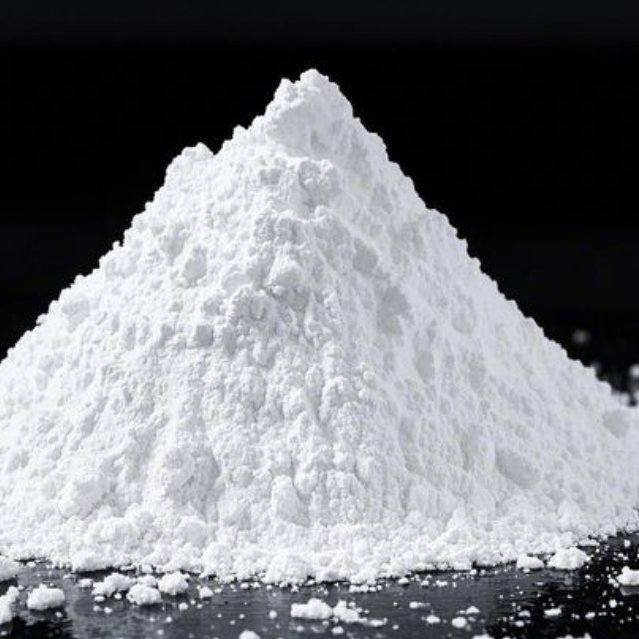
Fineness / Particle Size | 99% passing 325 mesh | Ensures maximum surface area for highly uniform chlorine absorption. |
Moisture Content | Strictly controlled below 1% | Prevents premature clumping and uneven chlorination rates. |
Optimal mesh size ensures maximum surface area. Fine particles absorb chlorine gas evenly. Conversely, coarse particles develop a reacted crust while hiding unreacted lime inside. Moisture content also requires strict vigilance. High free moisture causes premature clumping. These lumps create channels in your gas-solid reactors, allowing expensive chlorine gas to escape unreacted.
You must demand detailed Certificates of Analysis (CoA) for every single shipment of calcium hypochlorite raw material. Do not accept generic annual certificates. Verify your supplier's consistent batch-to-batch testing methodologies. Ask them which third-party laboratories they use for heavy metal verification.
Additionally, ensure their manufacturing processes align seamlessly with global environmental regulations. Their material handling must meet stringent EPA standards. A supplier with sloppy internal quality control will inevitably pass those unpredictable variables onto your production floor.
You should never switch your bulk raw material supply blindly. Transitioning requires a structured, multi-phase validation approach. Start with a rigorous pilot protocol. First, run a lab-scale chlorination test using a 10-kilogram sample. Monitor the reaction kinetics and heat generation closely.
Next, move to accelerated stability testing. Place the resulting hypochlorite samples in a controlled heating oven at 45°C for 30 days. Measure the available chlorine degradation weekly. Finally, if the lab results pass, execute a limited production run on one reactor line. Do not commit your entire facility until you verify the plant-scale outcomes.
Moving to a higher purity lime often requires operational recalibration. Since the reaction proceeds much more efficiently and rapidly, operators must adjust chlorine flow rates downward. The reaction will likely generate heat faster than before. You might need to upgrade your cooling tower systems or chiller capacities to handle the altered exothermic profile safely.
Smart procurement requires robust risk mitigation. Always maintain secondary qualified suppliers in your network. However, you must mandate identical impurity thresholds across all your approved vendors. Do not allow purchasing departments to substitute a lower-grade lime just to hit a monthly budget target. This strict alignment prevents sudden, disastrous drops in your final product grade.
Calcium hydroxide serves as the foundational matrix determining your final product's viability. You must stop treating it as a cheap filler. The chemical purity, particle fineness, and heavy metal profile dictate every aspect of your chlorination efficiency and product stability.
Manufacturers attempting to compete solely on price using low-grade lime inevitably suffer. They pay the harsh difference through frequent batch rejections, unstable commercial products, and lost B2B contracts. The market increasingly demands reliable, long-lasting disinfection solutions. Your raw materials must rise to meet that exact standard.
Procurement engineers and plant managers need to take immediate action. Audit your current supplier's latest CoA against the strict metrics outlined above. Check the iron and magnesium levels today. Then, contact a specialized high-purity vendor and request a low-iron sample for initial pilot testing. Upgrading your precursor material remains the most effective step toward dominating the premium chemical market.
A: Industry standards typically require iron content to remain below 0.02% (200 ppm). However, if you manufacture premium 70% grade calcium hypochlorite, you should mandate levels below 0.01%. This strict threshold prevents catalytic decomposition and ensures critical long-term thermal stability during storage.
A: While the unit price of premium raw materials runs higher, overall production efficiency drastically improves. You achieve a much higher yield of active chlorine per batch. Additionally, facilities see reduced waste sludge and less equipment scaling. This improved efficiency allows you to successfully sell into premium market tiers.
A: Finer particles, such as those passing a 325 mesh screen, provide a significantly greater surface area. This physical characteristic accelerates the gas-solid or gas-liquid reaction. It ensures highly uniform chlorine absorption throughout the batch, virtually eliminating useless, unreacted lime cores.